How to create family traditions that actually stick
Taco Tuesdays, Saturday pancakes, the first-day-of-school photo. Research shows family rituals give kids security and a sense of belonging. Here’s how to start yours.
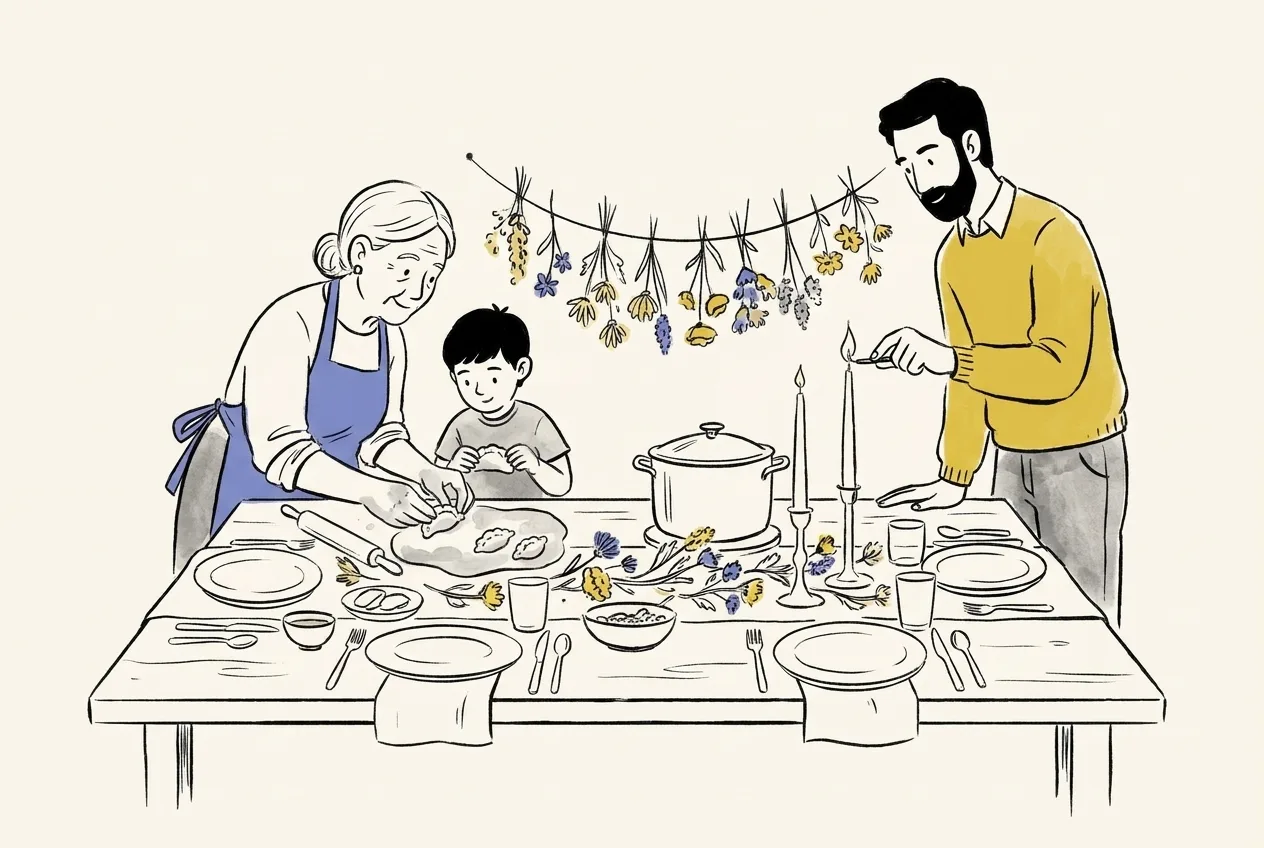
Family traditions and rituals — repeated, meaningful moments like Sunday pancakes or a bedtime story — are linked to children’s well-being, stronger family identity and even parents’ satisfaction with their marriage. They don’t need to be elaborate or expensive. What matters is that they repeat, feel like “ours” and carry emotional meaning.
- Routines organize daily life; rituals carry meaning and identity.
- Regular family rituals are linked to children’s health and adjustment.
- Simple, repeatable traditions work better than big, stressful productions.
The first-day-of-school photo on the front steps. Pancakes every Saturday. Watching the same holiday movie every December. These little rituals may seem trivial, but they do real work for a family.
Routines vs. rituals
Barbara Fiese and colleagues reviewed 50 years of research on family routines and rituals 1. They draw a useful distinction:
- Routines are about getting things done: who drives to practice, when dinner happens, how bedtime goes. They make life predictable.
- Rituals are about meaning: “This is who we are.” They create belonging and continuity across generations.
Both matter. Regular routines were linked to better child health and behavior, while meaningful rituals were associated with stronger family identity, adolescents’ sense of self and even more satisfying marriages.
Why shared meals stand out
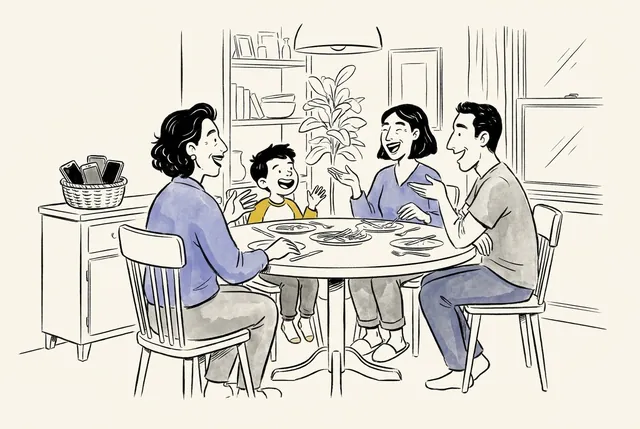
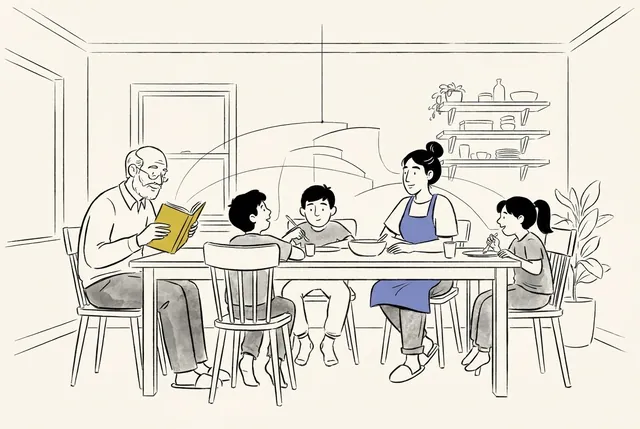
One of the best-studied rituals is the family meal. A meta-analysis of 17 studies with more than 180,000 children and teens found that kids who ate with their families three or more times a week were less likely to be overweight and to have disordered eating, and more likely to eat healthy foods 2. (More in Why family dinners matter.)
How to create traditions that stick
- Start small. A ritual you can repeat every week beats an elaborate annual event.
- Make it yours. “Taco Tuesday,” a silly birthday song only your family sings, a gratitude jar at Thanksgiving.
- Mark transitions. First day of school, a new driver’s license, coming home from a deployment.
- Keep the old, add the new. Blended and multicultural families can combine traditions from both sides.
- Let kids help choose. Ownership keeps traditions alive into the teen years.
- Protect it, but stay flexible. If movie night has to move to Sunday, move it — don’t drop it.
When traditions become stressful
Holidays can bring pressure, conflict and loneliness. If a tradition causes more stress than joy, it’s okay to change it. The point is connection, not perfection.
Frequently asked questions
What if our family is busy and everyone has different schedules?
Start small and realistic: a weekly breakfast, a Friday movie night, a “high and low of the day” at dinner. Consistency matters more than length.
Do traditions still matter for teenagers?
Yes, though teens may roll their eyes. Involve them in choosing or reshaping traditions — and keep the ones they quietly look forward to.
Sources
- Fiese, B. H., Tomcho, T. J., Douglas, M., Josephs, K., Poltrock, S., & Baker, T. (2002). A review of 50 years of research on naturally occurring family routines and rituals: Cause for celebration?. Journal of Family Psychology, 16(4), 381–390. doi:10.1037/0893-3200.16.4.381
- Hammons, A. J., & Fiese, B. H. (2011). Is frequency of shared family meals related to the nutritional health of children and adolescents?. Pediatrics, 127(6), e1565–e1574. doi:10.1542/peds.2010-1440
Evidence-based · Human-centered · Practical — how we write and fact-check our articles.
This article is for educational purposes and does not replace advice from a licensed professional. We cite original research and update articles when new evidence appears. Spotted an error? Let us know — see our editorial policy.
If you or someone you love is in crisis, call or text 988 (Suicide & Crisis Lifeline). Veterans: dial 988, then press 1.