Why family dinners matter for kids
Eating together three or more times a week is linked to healthier eating and fewer eating problems in kids. Here’s what research says and how to make it work in a busy week.
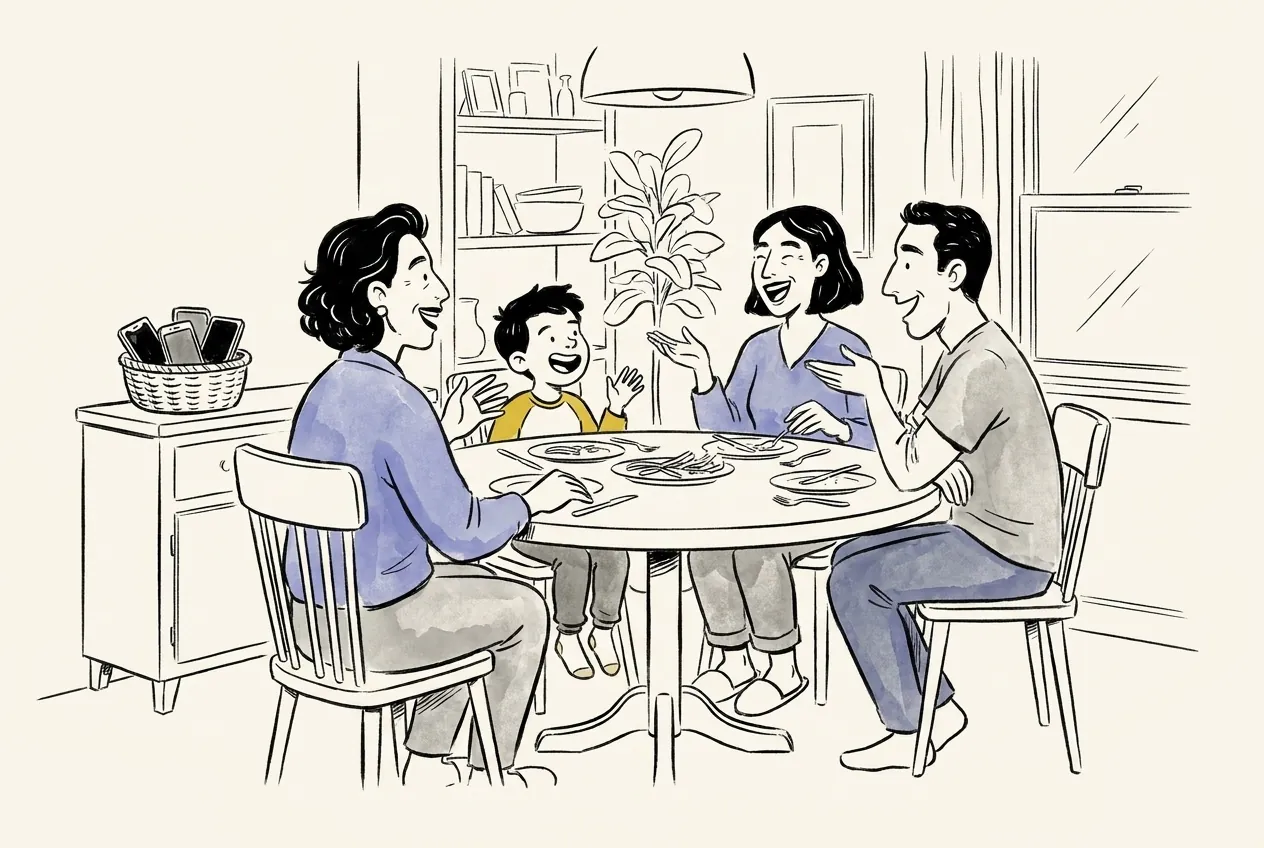
Kids and teens who eat with their families three or more times a week are less likely to be overweight or develop disordered eating, and more likely to eat healthy foods, according to a meta-analysis of more than 180,000 children. Family meals also work as a ritual that builds connection. It doesn’t have to be dinner or a home-cooked feast — what matters is regular time together, without screens.
- Three or more shared meals a week are linked to healthier eating habits in kids.
- The benefit comes from connection and routine, not from a perfect menu.
- Breakfast, weekend lunches or takeout at the table all count.
Between work, practice, homework and screens, sitting down together for dinner can feel impossible. But research suggests it’s worth the effort.
What research shows
Amber Hammons and Barbara Fiese combined 17 studies with more than 180,000 children and teens 1. Kids who shared three or more family meals a week were:
- about 12% less likely to be overweight;
- about 20% less likely to eat unhealthy foods;
- about 24% more likely to eat healthy foods;
- about 35% less likely to engage in disordered eating.
These studies show associations, not proof that dinner itself causes these effects. Families who eat together may differ in other ways. Still, the pattern is consistent.
Why it works
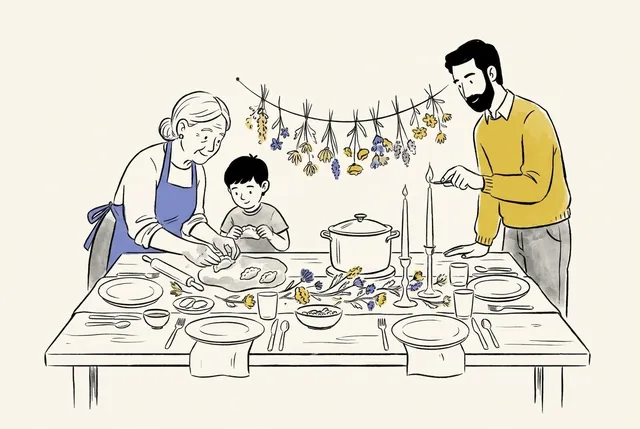
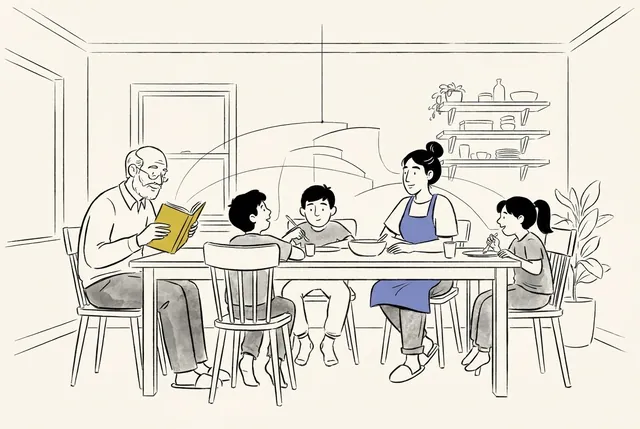
In a review of 50 years of research, Barbara Fiese and colleagues described family meals as both a routine and a ritual 2. As a routine, they structure the day. As a ritual, they say “we belong together.” Mealtimes are often the one moment when parents can notice how a child is really doing.
How to make it work
- Aim for three, not seven. Three shared meals a week is a realistic goal.
- Any meal counts. Breakfast, Sunday brunch, pizza on the living room floor.
- Put phones away. A basket on the counter works — for parents too.
- Keep it light. Dinner isn’t the time for report cards or lectures.
- Try conversation starters: “What was the best and worst part of your day?” or “What made you laugh today?”
- Let kids help. Setting the table or choosing the menu gives them ownership.
- Keep it simple. Takeout or sandwiches at the table still count.
A note on eating problems
If your child skips meals, eats in secret or seems anxious about food or weight, talk to your pediatrician. The National Alliance for Eating Disorders helpline (1-866-662-1235) can help families find support.
Frequently asked questions
We can’t eat dinner together on weekdays. Does breakfast count?
Yes. Any shared meal counts — breakfast, a weekend lunch, even a snack together after practice.
My teen wants to eat in their room. Should I insist?
Try negotiating a few fixed family meals a week, keep them low-pressure and let your teen help plan the menu.
Sources
- Hammons, A. J., & Fiese, B. H. (2011). Is Frequency of Shared Family Meals Related to the Nutritional Health of Children and Adolescents?. Pediatrics, 127(6), e1565–e1574. doi:10.1542/peds.2010-1440
- Fiese, B. H., Tomcho, T. J., Douglas, M., Josephs, K. та ін. (2002). A review of 50 years of research on naturally occurring family routines and rituals: Cause for celebration?. Journal of Family Psychology, 16(4), 381–390. doi:10.1037/0893-3200.16.4.381
Evidence-based · Human-centered · Practical — how we write and fact-check our articles.
This article is for educational purposes and does not replace advice from a licensed professional. We cite original research and update articles when new evidence appears. Spotted an error? Let us know — see our editorial policy.
If you or someone you love is in crisis, call or text 988 (Suicide & Crisis Lifeline). Veterans: dial 988, then press 1.