What does it mean to see the family as a system?
Why does one person’s stress ripple through the whole house? Family systems theory explains how roles, rules and relationships shape everyone in a family.
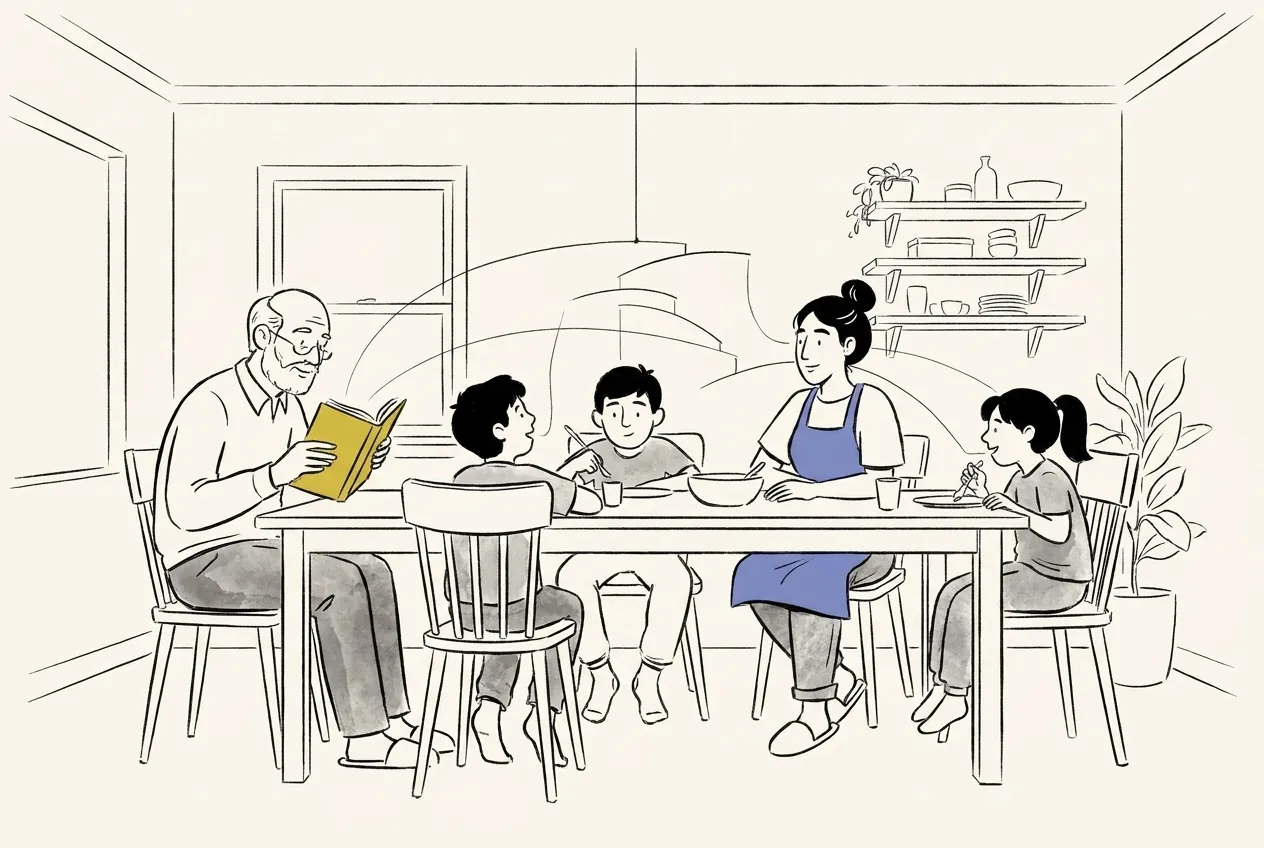
Family systems theory (family as a system, systemic approach) — an approach that sees the family as an interconnected whole, in which each member’s behavior affects and is affected by the others, rather than as a set of separate individuals.
Seeing the family as a system means understanding that each person’s behavior is connected to everyone else’s. A child’s acting out may reflect tension between parents; one person’s change shifts the whole family. Family systems research describes how families have subsystems (couple, parents, siblings), boundaries and patterns that tend to repeat — and that can be changed.
- A family works like a mobile: move one piece and the others move too.
- Families have subsystems — the couple, the parents, the siblings — with boundaries between them.
- Families resist change but can reorganize, especially during transitions.
A teenager starts skipping school. Dad works later and later. Mom snaps at everyone. Each could be explained on its own — or they might be parts of one pattern. That’s the core idea of family systems theory.
The family as a whole
Martha Cox and Blair Paley summarized how systems ideas apply to families 1. Three principles stand out:
- Wholeness. A family is more than the sum of its members. Patterns emerge that no single person controls.
- Hierarchy and subsystems. A family contains smaller systems — the couple, the parent team, the siblings — each with its own boundaries.
- Stability and change. Families tend to keep their familiar patterns, even unhelpful ones. But at transition points — a new baby, a teen leaving home, a divorce — they reorganize.
Patricia Minuchin argued that this view changes how we understand children’s development 2. Children don’t just get shaped by parents; they also shape them. And problems are often maintained by circular patterns rather than single causes.
What it looks like in real life
- Triangles. When two people are in conflict, they often pull in a third. Parents who don’t talk to each other may both lean on a child.
- Roles. The “responsible one,” the “troublemaker,” the “peacemaker.” Roles can stick for decades.
- Boundaries. Too rigid, and family members feel disconnected. Too loose, and kids get pulled into adult problems (see parentification).
- Generational patterns. How your parents handled conflict, money or grief often shows up in your own family.
How to use systems thinking
- Look for patterns, not culprits. Ask: “What usually happens right before and after this problem?”
- Change your part. You can’t control others, but if you respond differently, the pattern shifts.
- Protect the couple subsystem. Partners who stay a team support the whole family.
- Notice transitions. Strain during big changes is normal. It’s the system reorganizing.
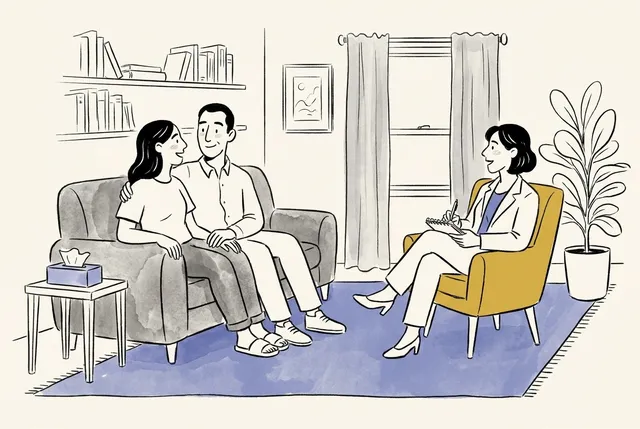
Family therapists use these ideas every day. If a pattern feels stuck, family therapy can help everyone see it — and change it — together.
Frequently asked questions
Does this mean a child’s problem is the parents’ fault?
No. Systems thinking isn’t about blame. It means looking at the patterns around a problem, which often reveals more ways to help.
Can one person change the family system?
Often, yes. When one person responds differently, the familiar pattern can’t run the same way, and others gradually adjust.
Sources
- Cox, M. J., & Paley, B. (1997). FAMILIES AS SYSTEMS. Annual Review of Psychology, 48(1), 243–267. doi:10.1146/annurev.psych.48.1.243
- Minuchin, P. (1985). Families and Individual Development: Provocations from the Field of Family Therapy. Child Development, 56(2), 289. doi:10.2307/1129720
Evidence-based · Human-centered · Practical — how we write and fact-check our articles.
This article is for educational purposes and does not replace advice from a licensed professional. We cite original research and update articles when new evidence appears. Spotted an error? Let us know — see our editorial policy.
If you or someone you love is in crisis, call or text 988 (Suicide & Crisis Lifeline). Veterans: dial 988, then press 1.