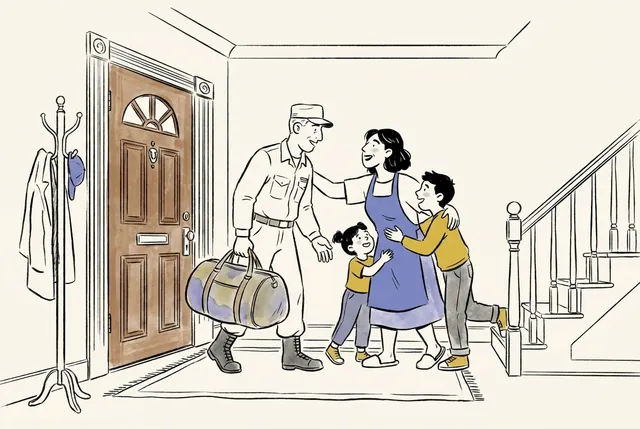
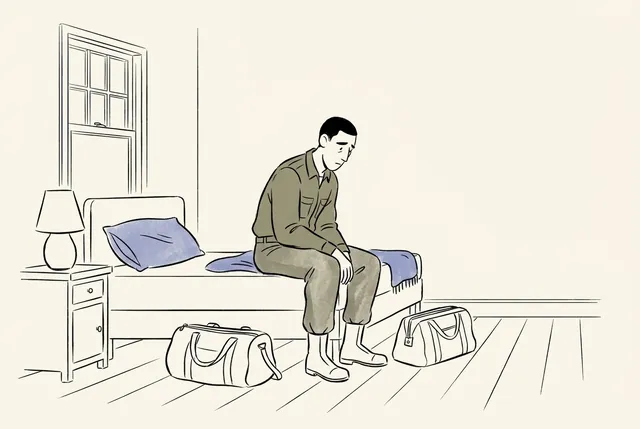
How to support a child whose parent died in military service
Losing a mom or dad in the military is a profound loss. Research on bereaved children shows what helps them grieve — and when to get extra support.
Children grieve differently from adults, and a parent’s sudden death is one of the hardest losses a child can face. Research shows that for most children grief gradually eases over time, but some develop prolonged grief that raises the risk of depression and PTSD. Honest communication, stable routines, a caring surviving parent and programs for bereaved families help. TAPS (800-959-8277) supports families of fallen service members 24/7.
- Most children’s grief eases over time, but some need extra support.
- The surviving parent’s well-being and parenting are key protective factors.
- Family bereavement programs have long-lasting benefits for kids.
There’s no right way to tell a child that their mom or dad isn’t coming home. If your family is facing this loss, you don’t have to find your way alone.
How children grieve
Children grieve in waves. A child may cry one moment and want to play the next. Young children may ask the same questions over and over. Teens may withdraw or act out. Grief can return at milestones — birthdays, graduations, Memorial Day.
What research shows
Nadine Melhem and colleagues followed children and teens whose parents had died suddenly 1. For most, grief gradually lessened over the following years. But about one in ten had persistent, intense grief that interfered with daily life, and these children were at higher risk of depression and PTSD.
Irwin Sandler and colleagues tested the Family Bereavement Program, group sessions for bereaved children and their surviving parents 2. The program improved parenting and reduced mental health problems in children, with benefits that lasted years later.
How to help
- Tell the truth in simple words appropriate to their age.
- Keep routines — school, meals, bedtime. Predictability feels safe.
- Let them grieve their way. Play, art, questions, silence — all are okay.
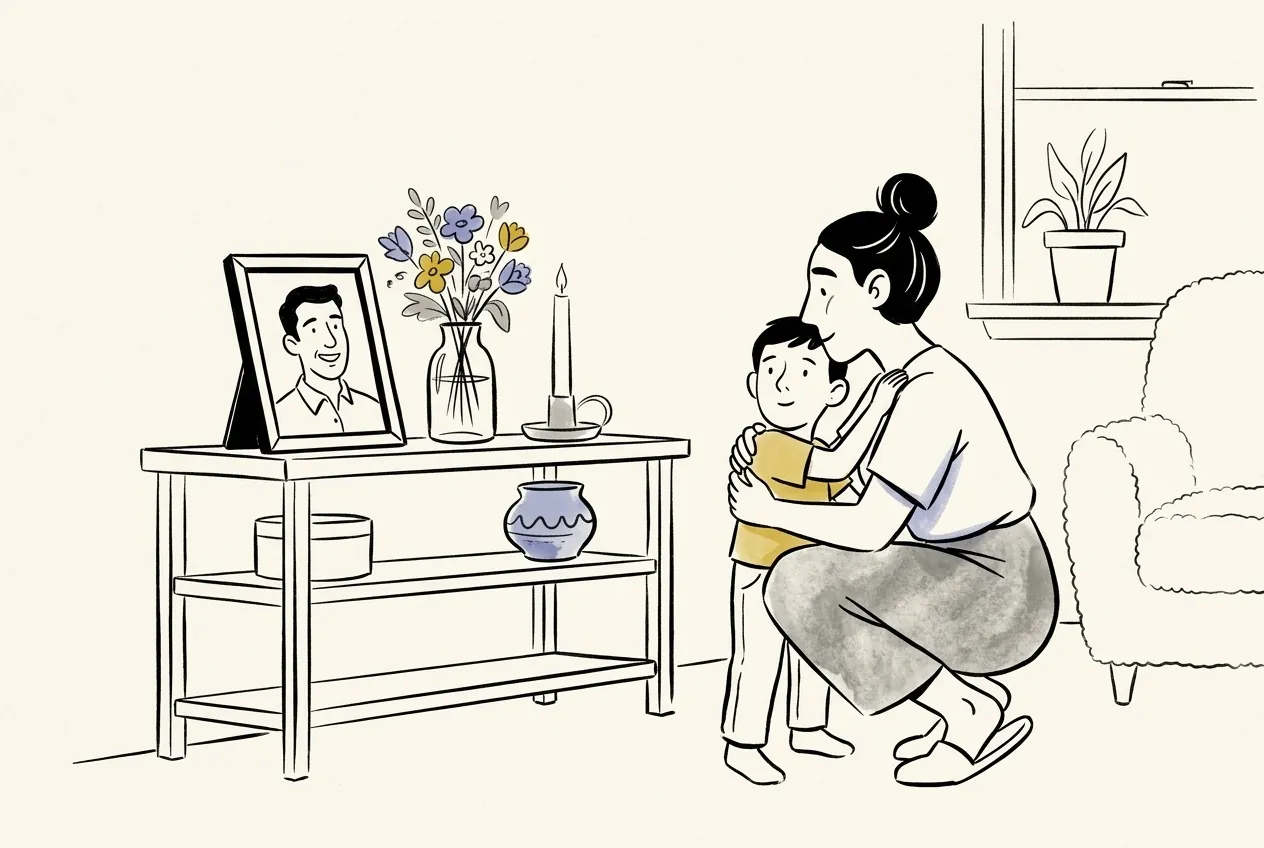
- Keep their parent present: photos, stories, a memory box, visiting the grave or a memorial.
- Take care of yourself. Children do better when the surviving parent gets support too.
- Tell the school and ask about counseling support.
- Watch for warning signs: lasting withdrawal, intense guilt, talk of wanting to die, school refusal or risky behavior.
Where to find support
- TAPS (Tragedy Assistance Program for Survivors): 800-959-8277, 24/7. TAPS runs Good Grief Camps and mentoring for military children.
- Military OneSource (800-342-9647) and your Casualty Assistance Officer for benefits and counseling.
- Grief centers in many communities offer free peer support groups for children.
- In crisis: call or text 988.
Grief doesn’t have a timeline. With love, honesty and support, children can carry their parent’s memory with them — and grow.
Frequently asked questions
Should my young child go to the funeral?
Many children benefit from being included, if they’re prepared for what they’ll see and an adult they trust stays with them. Give them a choice and a way to leave if needed.
How do I explain death to a young child?
Use clear, simple words: “Daddy died. His body stopped working, and he can’t come back.” Avoid phrases like “went to sleep” or “we lost him,” which can confuse young children.
Sources
- Melhem, N. M., Porta, G., Shamseddeen, W., Walker Payne, M., & Brent, D. A. (2011). Grief in Children and Adolescents Bereaved by Sudden Parental Death. Archives of General Psychiatry, 68(9), 911. doi:10.1001/archgenpsychiatry.2011.101
- Sandler, I. N., Ayers, T. S., Wolchik, S. A., Tein, J. та ін. (2003). The Family Bereavement Program: Efficacy evaluation of a theory-based prevention program for parentally bereaved children and adolescents. Journal of Consulting and Clinical Psychology, 71(3), 587–600. doi:10.1037/0022-006X.71.3.587
Evidence-based · Human-centered · Practical — how we write and fact-check our articles.
This article is for educational purposes and does not replace advice from a licensed professional. We cite original research and update articles when new evidence appears. Spotted an error? Let us know — see our editorial policy.
If you or someone you love is in crisis, call or text 988 (Suicide & Crisis Lifeline). Veterans: dial 988, then press 1.