How to get through the first months after homecoming
The homecoming is a joyful moment — and the start of a hard adjustment. Research shows what military families face after deployment and what helps.
Reintegration after deployment is often harder than families expect. Roles have shifted, kids have grown and the service member may be dealing with stress, sleep problems or PTSD. Research shows many returning veterans report family problems and mental health concerns, especially after combat deployments. Patience, gradual role sharing, honest communication and early help make the transition smoother.
- Family problems after deployment are common, not a sign of failure.
- Many returning service members report mental health concerns in the first year.
- Gradually renegotiating roles and routines helps everyone adjust.
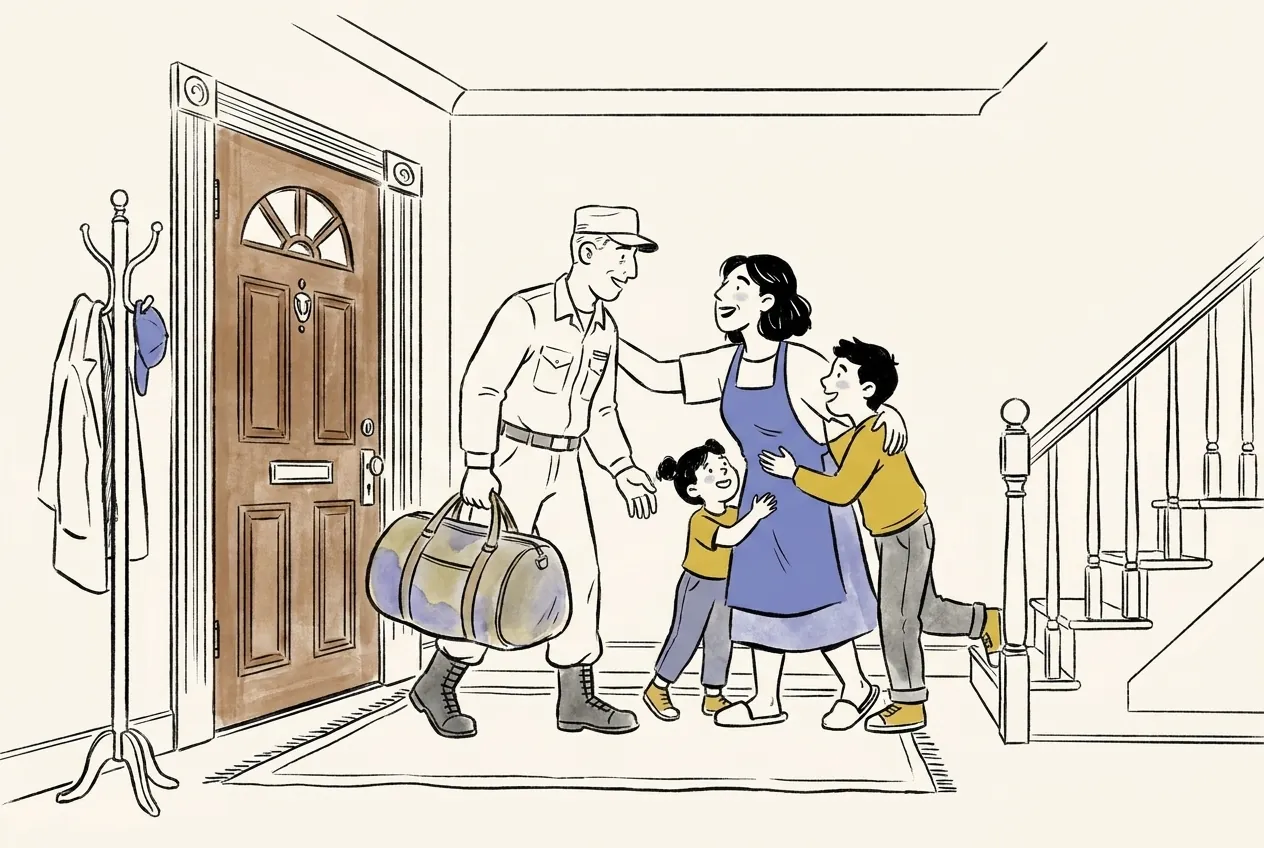
The welcome home sign, the hug at the airport, the kids running into his arms. And then, a few weeks later: arguments over who handles the money, a toddler who won’t go to Dad, nights of not sleeping. Homecoming is a beginning, not an ending.
What research shows
Steven Sayers and colleagues surveyed recently returned veterans who had been referred for a mental health evaluation 1. Most of those who were married or living with a partner reported family problems, such as feeling like a guest in their own home, not knowing their role, or children being afraid or distant. Family problems were closely tied to PTSD and depression symptoms.
Charles Hoge, Jennifer Auchterlonie and Charles Milliken analyzed post-deployment health data from hundreds of thousands of US service members 2. A substantial share of those returning from Iraq — nearly one in five — reported a mental health concern, and many used mental health services in the first year home.
Why it’s hard
- Roles changed. The at-home spouse ran everything alone and may not want to hand it all back.
- Kids changed. Babies became toddlers; teens became more independent.
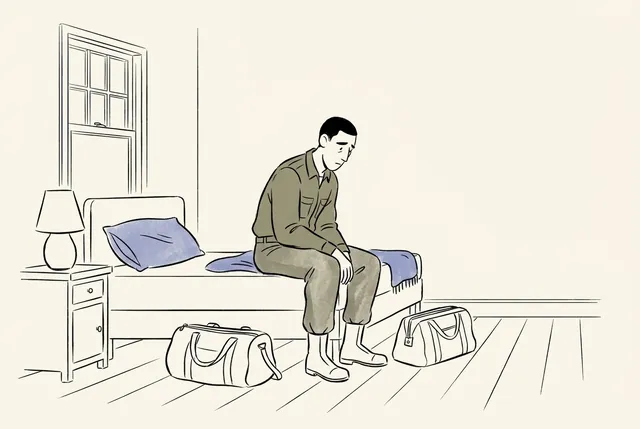
- The service member changed. Hypervigilance, irritability and sleep problems are common after deployment.
- Expectations clash. Everyone imagined a perfect reunion.
What helps
- Go slow. Plan a quiet first few weeks. Big parties can overwhelm.
- Renegotiate roles gradually. Talk about which tasks to share and when.
- Respect kids’ pace. Let them warm up. Spend one-on-one time with each child.
- Talk about the experience — at the pace the service member is comfortable with. Partners can share what the deployment was like at home too.
- Watch for warning signs: anger, heavy drinking, nightmares, isolation, reckless driving.
- Reconnect as a couple. Programs like Strong Bonds (Army) offer free couples retreats.
Where to get help
- Military OneSource (800-342-9647): non-medical counseling and reintegration resources.
- Vet Centers: readjustment counseling for eligible veterans and families.
- VA mental health and post-deployment care.
- In crisis: dial 988, then press 1, or text 838255.
Frequently asked questions
My spouse seems like a stranger. Is that normal?
Yes. You’ve both changed. Expect it to take months, not days, to get to know each other again. Talking about it openly helps.
When should we seek help?
If anger, drinking, nightmares, withdrawal or conflict aren’t easing after a few months, or if anyone feels unsafe, reach out to Military OneSource, a Vet Center or the VA.
Sources
- Sayers, S. L., Farrow, V. A., Ross, J., & Oslin, D. W. (2009). Family Problems Among Recently Returned Military Veterans Referred for a Mental Health Evaluation. The Journal of Clinical Psychiatry, 70(2), 163–170. doi:10.4088/JCP.07m03863
- Hoge, C. W., Auchterlonie, J. L., & Milliken, C. S. (2006). Mental Health Problems, Use of Mental Health Services, and Attrition From Military Service After Returning From Deployment to Iraq or Afghanistan. JAMA, 295(9), 1023. doi:10.1001/jama.295.9.1023
Evidence-based · Human-centered · Practical — how we write and fact-check our articles.
This article is for educational purposes and does not replace advice from a licensed professional. We cite original research and update articles when new evidence appears. Spotted an error? Let us know — see our editorial policy.
If you or someone you love is in crisis, call or text 988 (Suicide & Crisis Lifeline). Veterans: dial 988, then press 1.