How parents’ arguments affect kids — and how to fight in front of them
Not every argument harms kids. Research shows what kind of parental conflict hurts children — and how resolving it in front of them can even teach them something valuable.
Kids aren’t harmed by every disagreement between parents. Research shows that frequent, intense, hostile and unresolved conflict — especially about the child — is linked to anxiety, depression and behavior problems. Conflict that stays respectful and gets resolved, with kids seeing the repair, is much less harmful and can even teach them how to handle disagreements.
- Frequent, hostile, unresolved conflict hurts kids more than divorce itself in some studies.
- Children are especially affected when they feel threatened or blame themselves.
- Letting kids see you make up teaches them conflict can be survived.
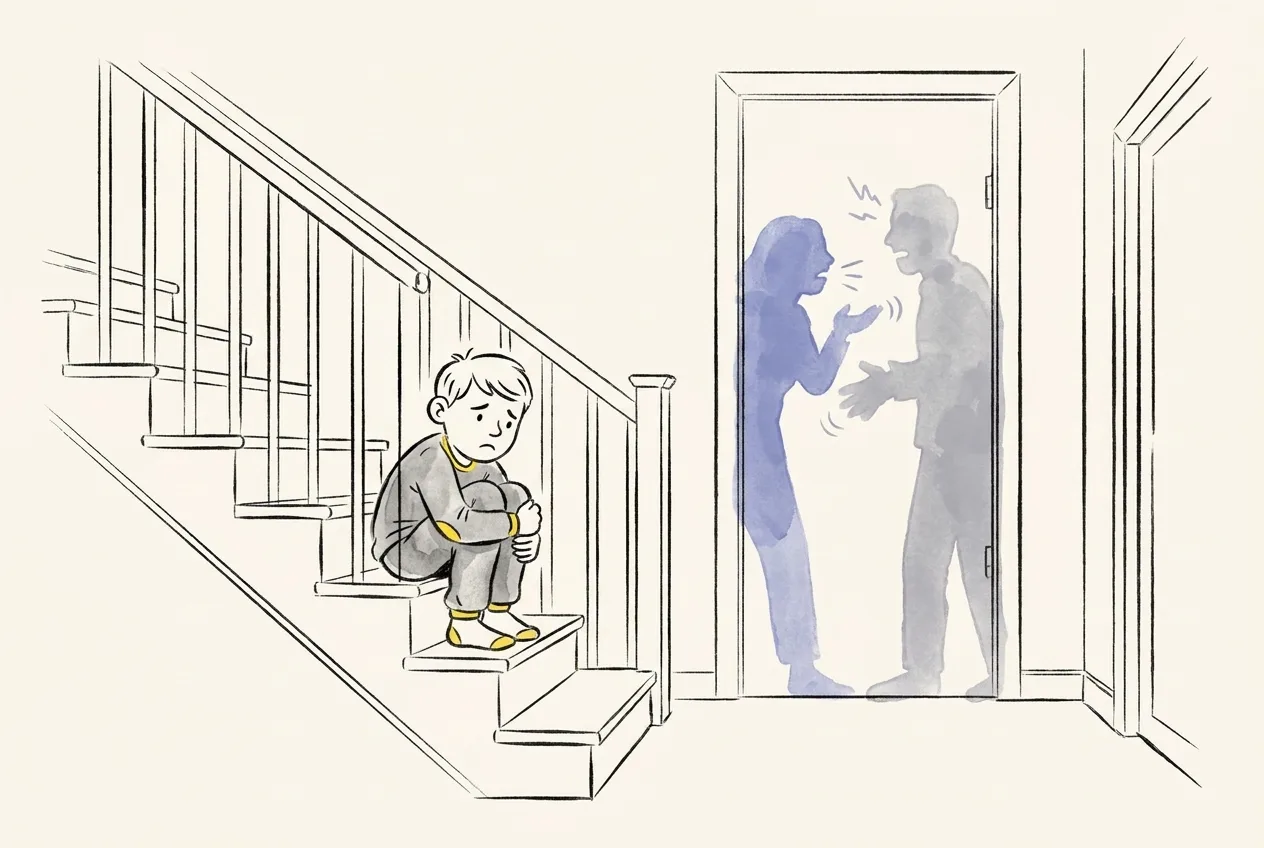
Your child is on the stairs in pajamas, listening to you and your partner argue behind a closed door. You might think they’re asleep or that they don’t understand. Research says they almost always notice — and that how you fight matters a lot.
What kind of conflict hurts
Gordon Harold and Ruth Sellers reviewed decades of research on parents’ conflict and children’s mental health 1. Conflict that is frequent, intense, hostile and poorly resolved — and especially conflict about the child — was linked to children’s anxiety, depression, behavior problems and difficulties at school. In some studies, the quality of the parents’ relationship mattered more than whether they stayed together.
Ordinary disagreements, handled respectfully, didn’t carry the same risk.
Why kids are affected
John Grych and Frank Fincham proposed that what matters most is how children interpret the conflict 2. Two questions shape their reactions:
- “Am I safe?” Kids who feel the family is threatened become anxious and hypervigilant.
- “Is it my fault?” Children who blame themselves are more likely to feel sad, guilty or ashamed.
How to fight in front of kids (if you must)
- No insults, threats or shouting. Disagree about the issue, not about each other.
- Never make kids the messenger or the judge. “Tell your father…” puts them in the middle.
- Take heated fights elsewhere. Say “We’ll talk about this later,” and do.
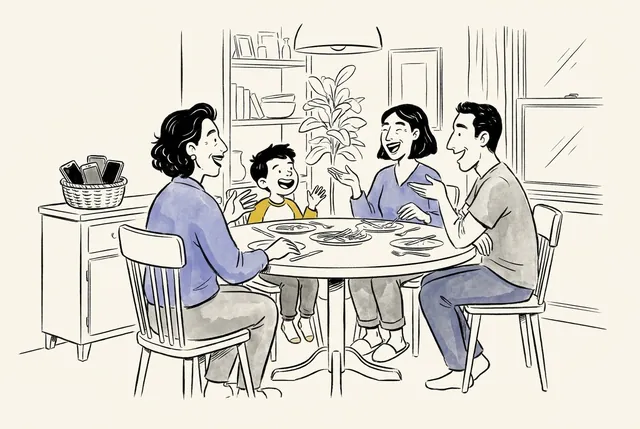
- Let them see the repair. “Dad and I talked it out. We figured out a plan.”
- Explain, briefly and calmly. Younger kids need reassurance that it isn’t their fault and that they’re safe.
Signs your child is struggling
Stomachaches, trouble sleeping, clinginess, irritability, school problems, trying to “fix” things or act as peacemaker. If you notice these, talk with your pediatrician or a family therapist.
When conflict is abuse
If fights involve violence, threats or fear, kids are affected even if they’re not hurt directly. Reach out to the National Domestic Violence Hotline at 1-800-799-7233.
Frequently asked questions
Should we never argue in front of the kids?
Mild, respectful disagreements are fine and even useful. Avoid screaming, insults and threats — and if things get heated, take it elsewhere.
What should I say to my child after a big fight?
Reassure them: “Mom and Dad had a big argument. We’re working it out. It’s not your fault, and you’re safe.” Then show them you’ve made up.
Sources
- Harold, G. T., & Sellers, R. (2018). Annual Research Review: Interparental conflict and youth psychopathology: An evidence review and practice focused update. Journal of Child Psychology and Psychiatry, 59(4), 374–402. doi:10.1111/jcpp.12893
- Grych, J. H., & Fincham, F. D. (1990). Marital conflict and children’s adjustment: A cognitive-contextual framework. Psychological Bulletin, 108(2), 267–290. doi:10.1037/0033-2909.108.2.267
Evidence-based · Human-centered · Practical — how we write and fact-check our articles.
This article is for educational purposes and does not replace advice from a licensed professional. We cite original research and update articles when new evidence appears. Spotted an error? Let us know — see our editorial policy.
If you or someone you love is in crisis, call or text 988 (Suicide & Crisis Lifeline). Veterans: dial 988, then press 1.