How to help your child through divorce
Most children of divorce do well in the long run. Research shows what protects them: low conflict, warm parenting and staying connected to both parents.
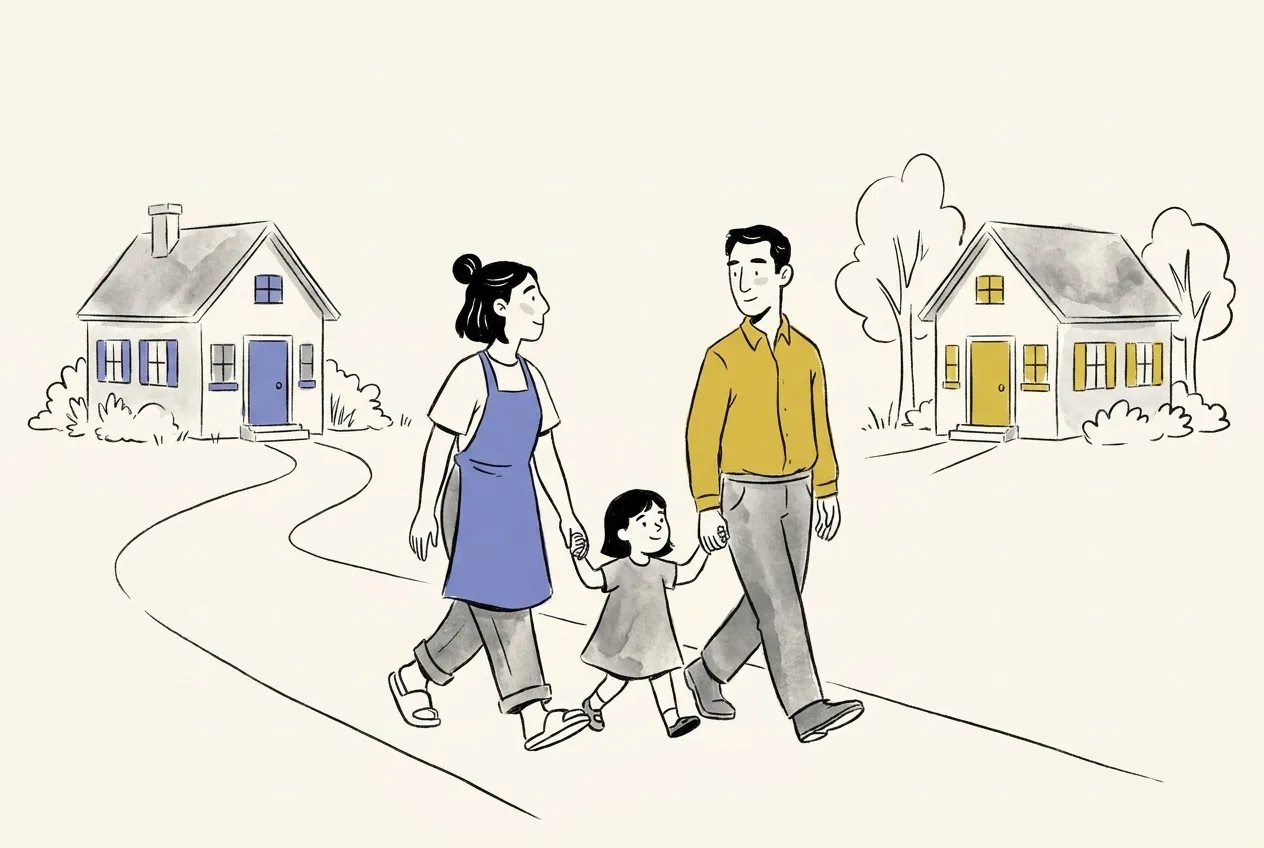
On average, children of divorced parents have slightly more difficulties than children whose parents stay married, but the differences are small and most kids adjust well over time. What matters most is what happens around the divorce: shielding children from conflict, warm and consistent parenting, staying connected to both parents and keeping other changes to a minimum.
- Most children of divorce are doing well a few years later.
- Ongoing parental conflict hurts kids more than the divorce itself.
- Warm parenting and a good relationship with both parents protect children.
Telling your kids that you’re divorcing can be one of the hardest conversations of your life. You may worry that you’re damaging them forever. Research offers a more hopeful — and more practical — picture.
What research shows
Sociologist Paul Amato combined dozens of studies comparing children of divorced and married parents — first nearly 100 studies from the 1960s to 1980s, then 67 more from the 1990s 1. On average, children of divorce scored somewhat lower on school achievement, behavior, emotional well-being and relationships. But the differences were small, and many children of divorce did as well as or better than their peers.
In a review of the consequences of divorce, Amato concluded that how divorce affects children depends largely on what happens around it 2.
What protects children
- Low conflict between parents. Ongoing fighting, especially in front of kids or through kids, is one of the biggest risks.
- Warm, consistent parenting from the parent they live with most.
- A close relationship with the other parent — not just visits, but real involvement.
- Financial stability and as few moves and school changes as possible.
- Fewer transitions. Multiple new partners and households add stress.
What to do
- Tell them together, if it’s safe, in simple words. Plan what you’ll say.
- Say it’s not their fault — often, not just once.
- Keep routines in both homes as similar as you can.
- Never use kids as messengers or spies, and don’t badmouth the other parent.
- Make a parenting plan. Many US states require one; mediators and co-parenting apps can help.
- Let them have their feelings — sadness, anger, relief — without needing to fix them.
- Take care of yourself. Kids do better when parents are coping.
When to get help
If your child shows lasting sadness, anger, school problems or withdrawal, talk to their pediatrician or a child therapist. If there was abuse in the relationship, safety comes first — the National Domestic Violence Hotline (1-800-799-7233) can help you plan.
Frequently asked questions
How do we tell our kids we’re divorcing?
Together if possible, simply and calmly. Explain that it’s a grown-up decision, it’s not their fault, both parents will always love them, and what will happen next.
Should kids choose which parent to live with?
Children shouldn’t be asked to choose. Older kids’ preferences can be heard, but adults make the decision — through mediation or the court if needed.
Sources
- Amato, P. R. (2001). Children of divorce in the 1990s: An update of the Amato and Keith (1991) meta-analysis. Journal of Family Psychology, 15(3), 355–370. doi:10.1037/0893-3200.15.3.355
- Amato, P. R. (2000). The consequences of divorce for adults and children. Journal of Marriage and Family, 62(4), 1269–1287. doi:10.1111/j.1741-3737.2000.01269.x
Evidence-based · Human-centered · Practical — how we write and fact-check our articles.
This article is for educational purposes and does not replace advice from a licensed professional. We cite original research and update articles when new evidence appears. Spotted an error? Let us know — see our editorial policy.
If you or someone you love is in crisis, call or text 988 (Suicide & Crisis Lifeline). Veterans: dial 988, then press 1.