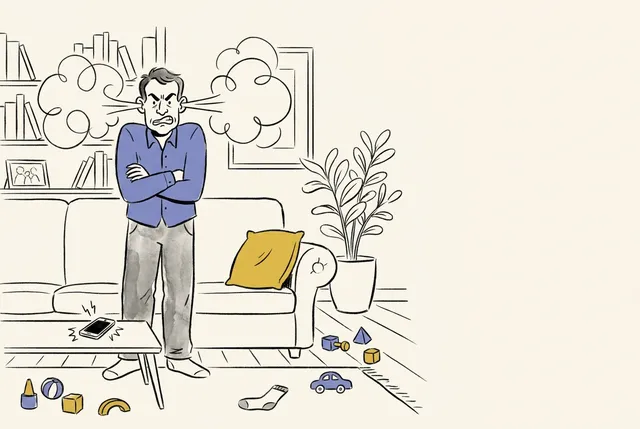
Emotional affairs: what they are and why they can hurt as much as physical cheating
Late-night texts, secret confidences, a “work spouse.” When does a close friendship become an emotional affair — and why does it hurt so much?
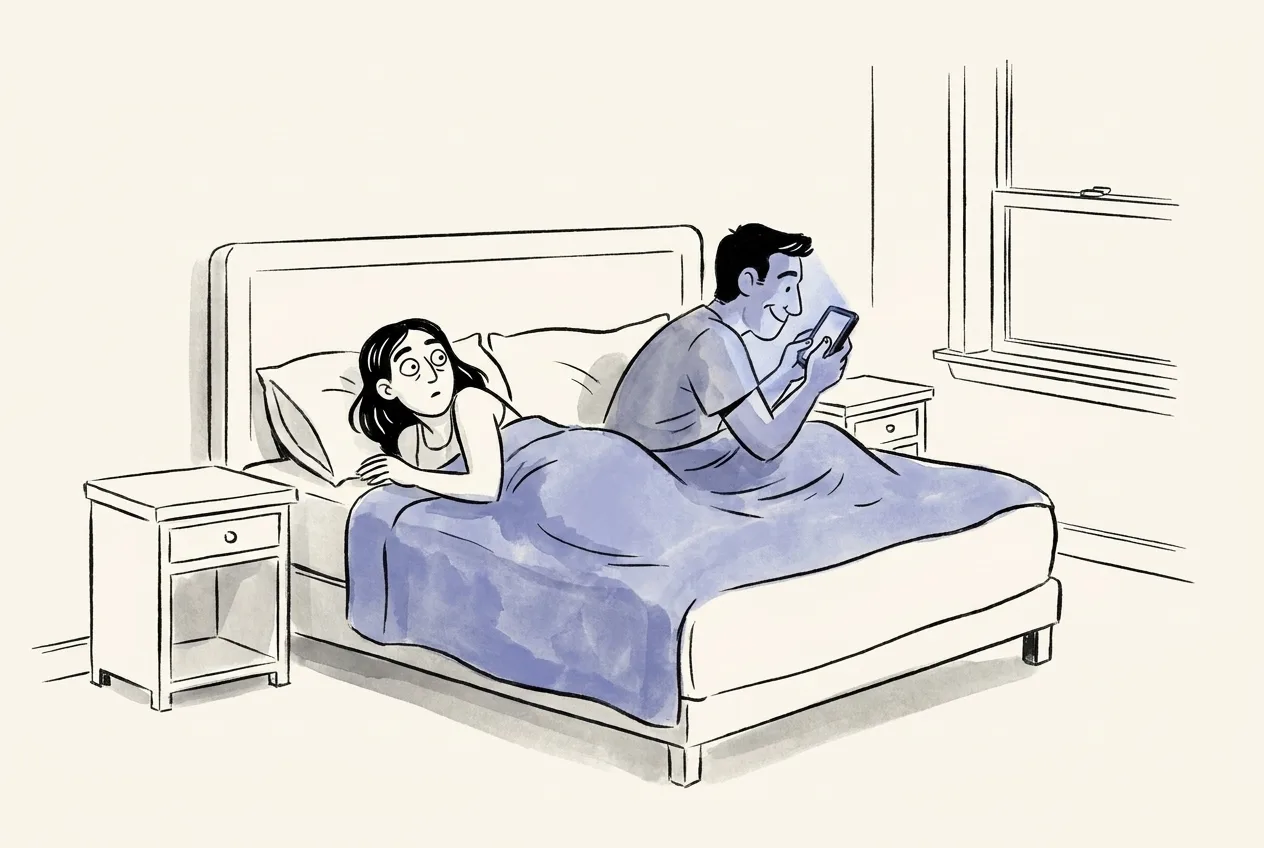
Emotional affair (emotional infidelity, emotional cheating) — a relationship with someone outside the couple that involves deep emotional intimacy, secrecy and attachment that would normally belong to the partner, even without sexual contact.
An emotional affair is a close, secretive relationship with someone outside your couple that takes the emotional intimacy you’d normally share with your partner. Research shows people define emotional infidelity in terms of falling in love, sharing deep secrets and emotional dependence — and many find it as painful as sexual infidelity. Secrecy is the clearest warning sign.
- Emotional infidelity is about intimacy, secrecy and attachment, not just friendship.
- Many people experience emotional betrayal as deeply as sexual betrayal.
- Couples can recover, often with the help of couples therapy.
It started as a friendship with a coworker. Then came the long lunches, the inside jokes, the texts at 11 p.m. that you quietly deleted. Nothing physical happened. So why does it feel like a betrayal?
What counts as emotional infidelity
Amanda Guitar and colleagues asked hundreds of people what they consider sexual and emotional infidelity 1. Sexual infidelity was mostly defined by physical acts. Emotional infidelity was defined by things like falling in love with someone else, sharing deep emotional intimacy and spending a lot of time with them — feelings and attention that are normally reserved for your partner.
A classic study by David Buss and colleagues showed that people react differently to the two types of betrayal: some are more upset by the thought of sexual infidelity, others by emotional infidelity, and on average men and women differed in which they found more distressing 2. Either way, many people experience emotional betrayal as deeply painful.
Warning signs
- Secrecy. You hide messages, delete chats or downplay how much you talk.
- Emotional priority. You share your worries and good news with this person first.
- Comparison. You find yourself thinking, “They understand me better than my spouse.”
- Anticipation. You look forward to seeing them in a way that feels like a crush.
- Defensiveness. You get irritated if your partner asks about them.
The simplest test: Would you be comfortable if your partner read every message?
If it’s happening to you
- Name it honestly, at least to yourself.
- Set boundaries or end the relationship with the other person.
- Look at what’s missing at home. Emotional affairs often grow in the gaps of a disconnected marriage — that’s an explanation, not an excuse.
If you discovered your partner’s emotional affair
Your hurt is real, even if “nothing happened.” Recovery usually requires ending the affair, full transparency and time. Many couples come through it and even rebuild a stronger connection — often with the help of a couples therapist.
Frequently asked questions
Is it an emotional affair if nothing physical happened?
It can be. Ask yourself: would you be comfortable if your partner saw all your messages? Do you share things with this person you don’t share with your partner?
Can a marriage survive an emotional affair?
Many do. Recovery usually requires ending the affair, full honesty, and time to rebuild trust. Couples therapy can help a lot.
Sources
- Guitar, A. E., Geher, G., Kruger, D. J., Garcia, J. R., Fisher, M. L., & Fitzgerald, C. J. (2017). Defining and distinguishing sexual and emotional infidelity. Current Psychology, 36(3), 434–446. doi:10.1007/s12144-016-9432-4
- Buss, D. M., Larsen, R. J., Westen, D., & Semmelroth, J. (1992). Sex differences in jealousy: Evolution, physiology, and psychology. Psychological Science, 3(4), 251–256. doi:10.1111/j.1467-9280.1992.tb00038.x
Evidence-based · Human-centered · Practical — how we write and fact-check our articles.
This article is for educational purposes and does not replace advice from a licensed professional. We cite original research and update articles when new evidence appears. Spotted an error? Let us know — see our editorial policy.
If you or someone you love is in crisis, call or text 988 (Suicide & Crisis Lifeline). Veterans: dial 988, then press 1.