Criticism, contempt, defensiveness, stonewalling: the four warning signs in a marriage
Every couple argues. What predicts divorce is how. Here’s what John Gottman’s research found about the “Four Horsemen” and their antidotes.
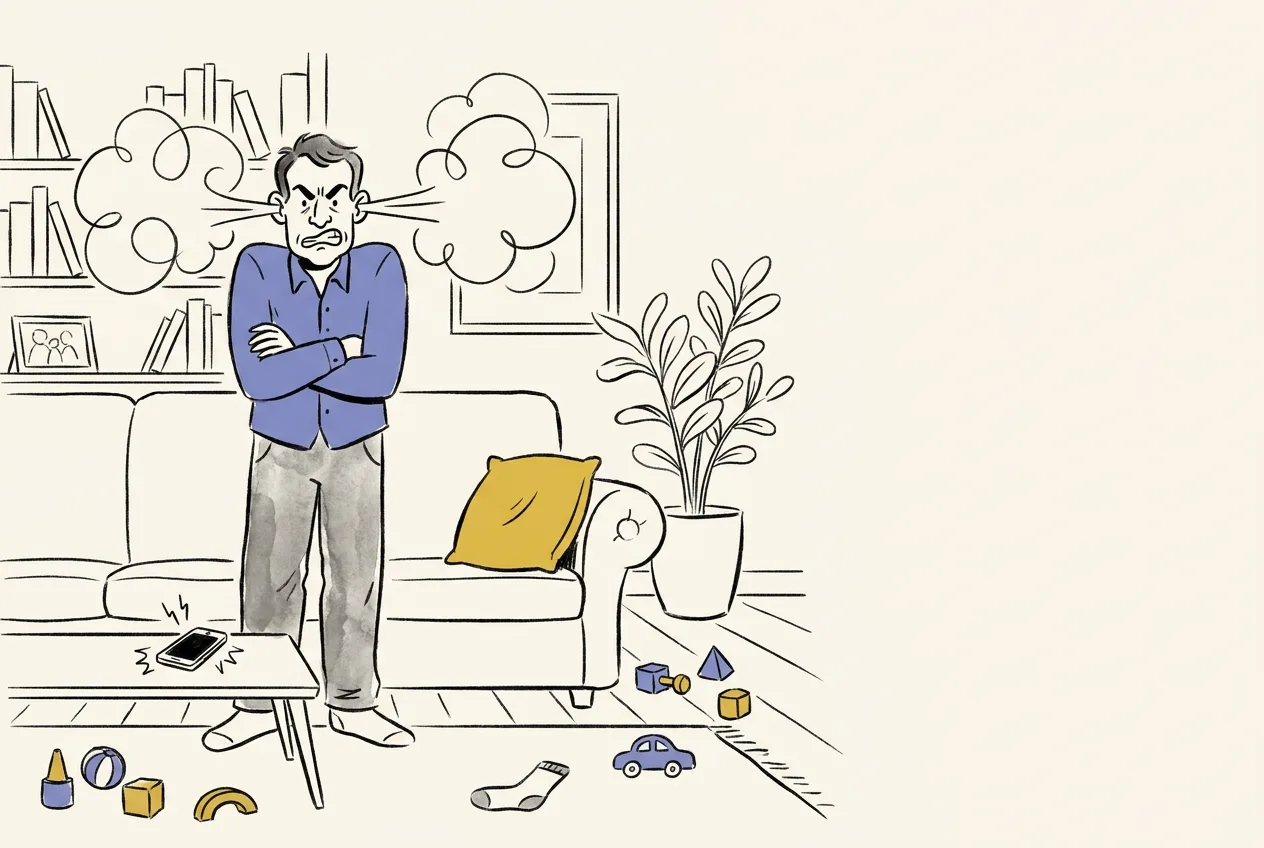
Four Horsemen (Gottman’s Four Horsemen, criticism, contempt, defensiveness, stonewalling) — four patterns of communication during conflict — criticism, contempt, defensiveness and stonewalling — that psychologist John Gottman found predict a higher risk of divorce.
The “Four Horsemen” are four ways of fighting that, in John Gottman’s research, signaled a marriage at risk: criticism, contempt, defensiveness and stonewalling. Arguing itself isn’t the problem. Couples who regularly attack each other’s character, roll their eyes, deflect blame or shut down are far more likely to split up. Each pattern has a practical antidote you can learn.
- Conflict is normal; how you argue matters more than how often.
- Contempt — sarcasm, mockery, eye-rolling — is the strongest single predictor of divorce in Gottman’s work.
- Each horseman has an antidote: gentle start-up, appreciation, taking responsibility and self-soothing.
Every couple fights about the dishes, money and in-laws. Fighting isn’t what breaks marriages. Psychologist John Gottman spent decades watching couples argue in his lab, and he found that a few specific patterns predict divorce with surprising accuracy. He called them the Four Horsemen.
What the research showed
In a 1992 study, Gottman and Robert Levenson recorded 73 married couples discussing a conflict and coded every statement as positive or negative 1. Couples whose arguments stayed mostly positive — even when they disagreed — were more stable four years later. Couples whose arguments tilted negative were more likely to consider separation and to actually separate, and they even showed more health problems.
When the researchers followed couples for 14 years, a pattern emerged: heavy negativity during conflict predicted divorce early in marriage, while a lack of warmth and positive emotion predicted divorce later on 2.
The four horsemen
1. Criticism. Not a complaint about a specific thing (“You didn’t text me you’d be late”), but an attack on the person: “You never think about anyone but yourself.”
2. Contempt. Sarcasm, mockery, name-calling, eye-rolling, a sneer. Contempt says I’m better than you. It is the most corrosive of the four.
3. Defensiveness. Making excuses or counterattacking instead of hearing the concern: “Well, you forgot the electric bill last month.”
4. Stonewalling. Shutting down, going silent, turning away, walking out. Often it isn’t indifference: the person is so overwhelmed — flooded — that they can’t keep talking.
The antidotes
- Instead of criticism — a gentle start-up. Talk about your feelings and a specific need: “I felt worried when you were late. Could you text me next time?”
- Instead of contempt — a culture of appreciation. Notice and say out loud what your partner does well, every day. It builds a buffer for hard conversations.
- Instead of defensiveness — take responsibility, even for part of the problem: “You’re right, I did forget. I’m sorry.”
- Instead of stonewalling — self-soothe. Call a time-out, take at least 20 minutes to calm down (a walk, slow breathing), then come back to the conversation.
What to do this week
Pick one horseman you recognize in yourself — not in your partner. Notice it the next time it shows up, and try the antidote just once. Small shifts in how you argue add up over years.
If arguments in your relationship include fear, threats or physical violence, that’s not a communication problem — it’s abuse. The National Domestic Violence Hotline is available 24/7 at 1-800-799-7233. More on our Get help now page.
Frequently asked questions
We argue a lot. Does that mean we’re headed for divorce?
Not necessarily. Many happy couples argue often. What matters is whether your arguments include respect, humor and repair attempts, or are dominated by contempt and shutting down.
My partner stonewalls. What can I do?
Stonewalling usually means your partner is flooded. Agree on a break of at least 20 minutes, during which neither of you rehearses the argument, and set a time to come back to it.
Sources
- Gottman, J. M., & Levenson, R. W. (1992). Marital processes predictive of later dissolution: Behavior, physiology, and health. Journal of Personality and Social Psychology, 63(2), 221–233. doi:10.1037/0022-3514.63.2.221
- Gottman, J. M., & Levenson, R. W. (2000). The timing of divorce: Predicting when a couple will divorce over a 14-year period. Journal of Marriage and the Family, 62(3), 737–745. doi:10.1111/j.1741-3737.2000.00737.x
Evidence-based · Human-centered · Practical — how we write and fact-check our articles.
This article is for educational purposes and does not replace advice from a licensed professional. We cite original research and update articles when new evidence appears. Spotted an error? Let us know — see our editorial policy.
If you or someone you love is in crisis, call or text 988 (Suicide & Crisis Lifeline). Veterans: dial 988, then press 1.