Parental burnout: the signs, the causes and how to recover
Exhausted, running on empty, going through the motions with your kids? Parental burnout is real, it’s different from ordinary tiredness and depression, and it’s more common in the US than in many other countries.
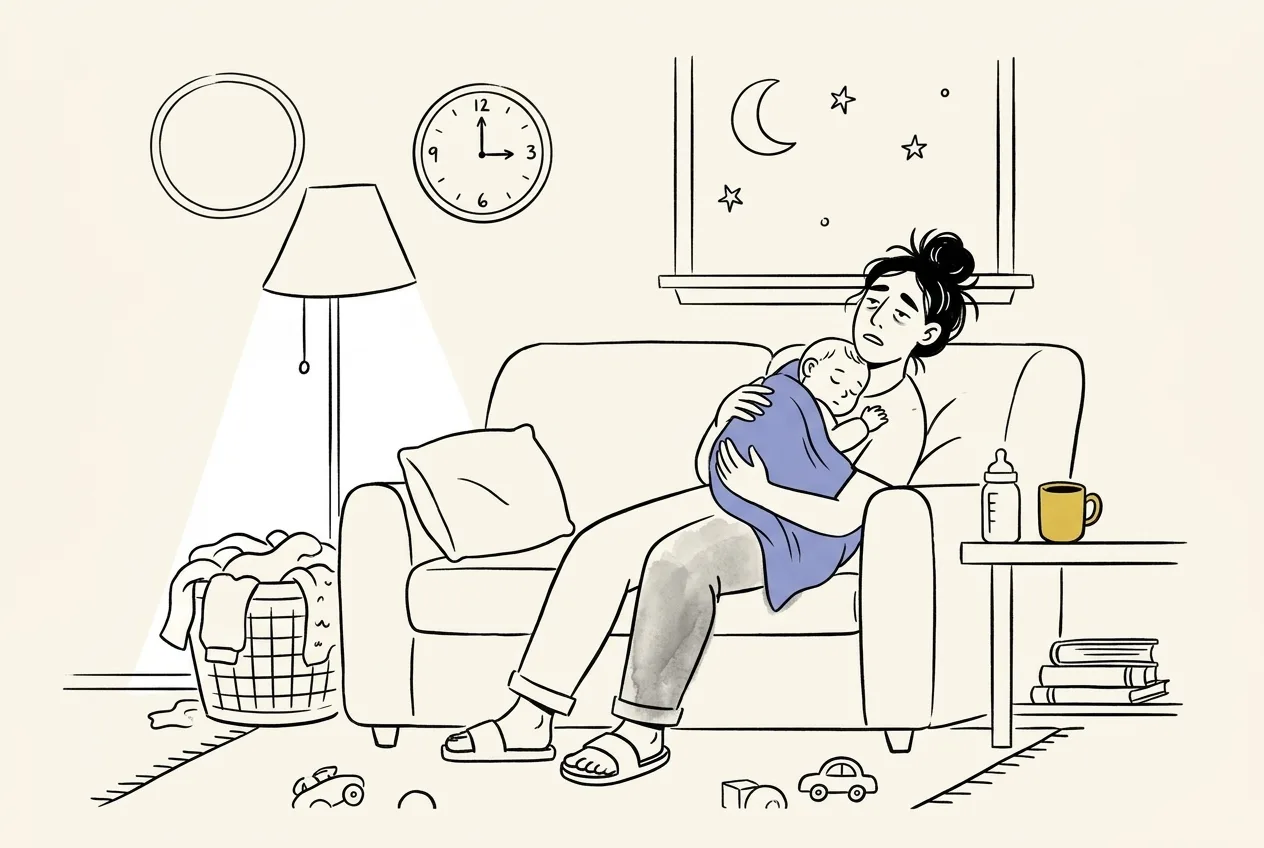
Parental burnout (parenting burnout) — a state of exhaustion that develops when the demands of parenting chronically outweigh a parent’s resources, marked by overwhelming fatigue, emotional distance from one’s children, loss of pleasure in parenting and a sense of no longer being the parent one used to be.
Parental burnout happens when the stress of raising kids chronically exceeds the resources you have to cope. It shows up as deep exhaustion, emotional distance from your kids, losing any joy in parenting and feeling like a different person from the parent you used to be. A 42-country study found it is most common in individualistic Western cultures like the US. Recovery comes from reducing demands and adding resources — not from trying harder.
- Parental burnout is distinct from job burnout and from depression.
- It’s more common in cultures that put high pressure on individual parents.
- The fix is rebalancing risks and resources: less pressure, more support and rest.
You love your kids. But lately, you’re running on fumes. You go through the motions — lunches, homework, bedtime — while feeling nothing but exhaustion. You catch yourself thinking, “I’m not the parent I used to be.” You might be experiencing parental burnout.
What parental burnout is
Moïra Mikolajczak, James Gross and Isabelle Roskam describe four core signs 1:
- Overwhelming exhaustion tied to your role as a parent.
- Contrast with your former self: “I used to be a good, patient parent.”
- Feeling fed up — losing any pleasure in being with your kids.
- Emotional distancing: doing the basics, but disconnecting emotionally.
The same researchers showed that parental burnout is distinct from job burnout and depression 3. It is specific to parenting, and it predicts problems — like thoughts of escape and harsh or neglectful parenting — beyond what depression predicts.
Why it happens — and why the US is high-risk
Burnout develops when the demands of parenting chronically outweigh your resources. Risks include perfectionism, a child with special needs or chronic illness, lack of help from a partner, financial stress and isolation. Resources include sleep, time for yourself, a supportive co-parent, friends and family.
A study across 42 countries found big differences in how common parental burnout was 2. It was highest in individualistic Western cultures, including the United States, where parents often face high expectations with little collective support.
How to recover
- Lower the bar. Store-bought cupcakes are fine. So is cereal for dinner sometimes.
- Reduce demands. Cut an activity, say no to a commitment, simplify routines.
- Add resources. Swap babysitting with a friend, ask your partner for a real split, protect sleep.
- Take breaks without guilt. Even 20 minutes alone counts.
- Talk about it. Many parents feel ashamed of burnout. Saying it out loud to a friend or doctor helps.
- Get professional help. Therapy targeting parental burnout has shown good results.
When to get help right away
If you’re having thoughts of running away, harming yourself or hurting your child, reach out now: call or text 988, or the Childhelp hotline at 1-800-422-4453, which also supports overwhelmed parents.
Frequently asked questions
How is parental burnout different from just being tired?
Tiredness improves with a good night’s sleep or a weekend away. Burnout is chronic exhaustion plus emotional distance and loss of joy in parenting that don’t go away with rest.
Can parental burnout hurt my kids?
Severe burnout is linked to more neglect and harsh parenting, and to parents’ thoughts of escape. That’s why it’s worth taking seriously and getting help early.
Sources
- Mikolajczak, M., Gross, J. J., & Roskam, I. (2019). Parental burnout: What is it, and why does it matter?. Clinical Psychological Science, 7(6), 1319–1329. doi:10.1177/2167702619858430
- Roskam, I., et al. (International Investigation of Parental Burnout Consortium) (2021). Parental burnout around the globe: A 42-country study. Affective Science, 2(1), 58–79. doi:10.1007/s42761-020-00028-4
- Mikolajczak, M., Gross, J. J., Stinglhamber, F., Lindahl Norberg, A., & Roskam, I. (2020). Is parental burnout distinct from job burnout and depressive symptoms?. Clinical Psychological Science, 8(4), 673–689. doi:10.1177/2167702620917447
Evidence-based · Human-centered · Practical — how we write and fact-check our articles.
This article is for educational purposes and does not replace advice from a licensed professional. We cite original research and update articles when new evidence appears. Spotted an error? Let us know — see our editorial policy.
If you or someone you love is in crisis, call or text 988 (Suicide & Crisis Lifeline). Veterans: dial 988, then press 1.