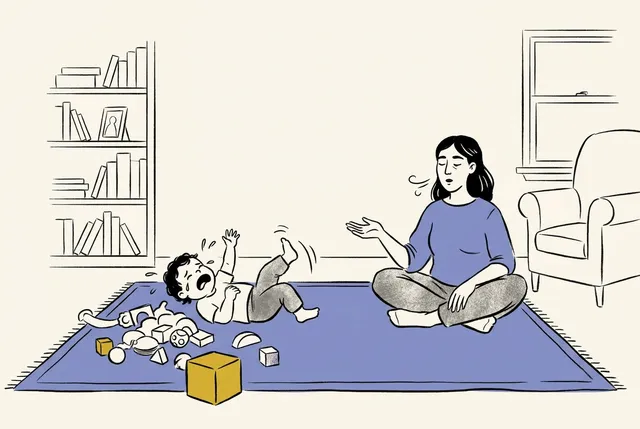
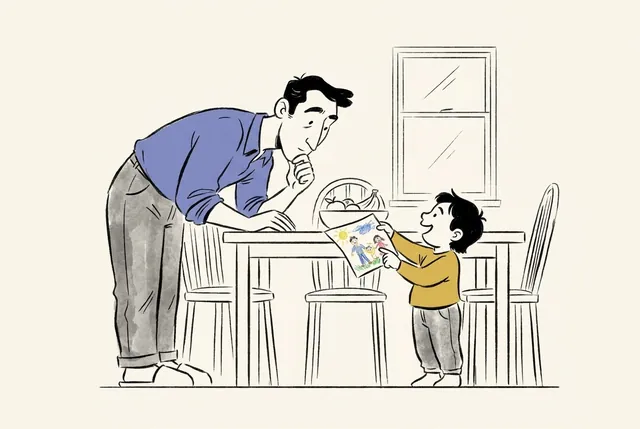
Emotion coaching: how to help your child handle big feelings
“Stop crying” rarely works. Emotion coaching teaches parents to see a child’s feelings as a chance to connect and teach. Here are the steps and the research behind them.
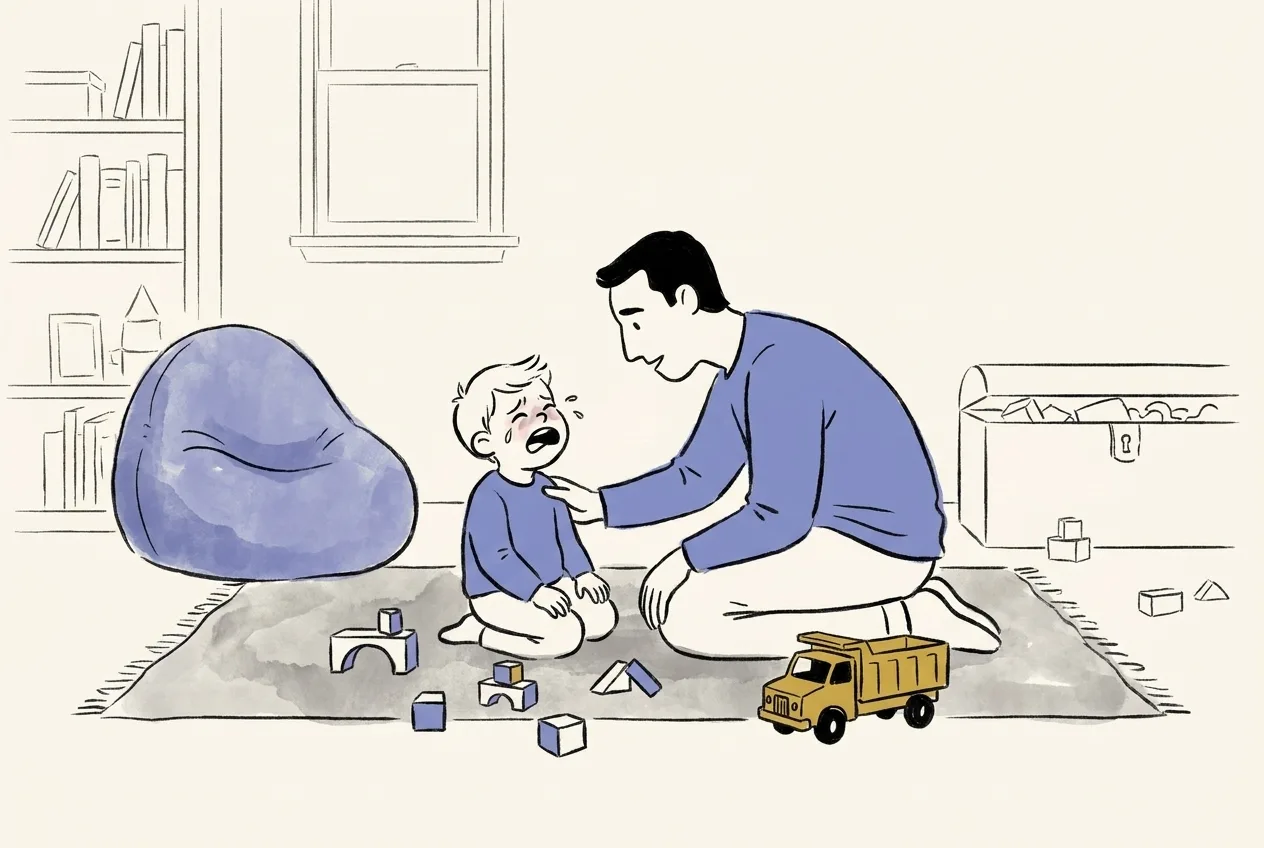
Emotion coaching (emotion-coaching parenting) — a parenting approach in which parents notice a child’s emotions, accept them as valid, help the child name them and then guide them toward handling the situation — while still setting limits on behavior.
Emotion coaching is a way of responding to a child’s feelings with empathy and guidance instead of dismissing or punishing them. Children of emotion-coaching parents, in John Gottman’s research, were better at calming down, got along better with peers and did better at school. A parenting program built on these ideas improved parents’ responses and children’s behavior.
- All feelings are acceptable; not all behavior is.
- Emotion-coached kids regulate emotions better and have fewer behavior problems.
- The skills can be learned — parenting programs improve them in a few weeks.
“Stop crying, it’s just a toy.” “Big boys don’t get scared.” Most of us heard these growing up, and they slip out of our own mouths too. Research suggests there’s a better way to respond to big feelings.
A parent’s philosophy of emotions
In the 1990s, John Gottman, Lynn Katz and Carole Hooven studied not only how parents behave but how they think about emotions — their own and their kids’ 1. Some parents saw a child’s sadness or anger as something to dismiss or shut down. Others saw it as a chance to connect and teach.
Children of the second group — emotion-coaching parents — were better at calming themselves, had fewer behavior problems, got along better with other kids and did better in school.
Five steps of emotion coaching
- Notice the emotion, especially at low intensity, before it becomes a meltdown.
- See it as a chance to connect, not a nuisance.
- Listen with empathy and validate: “You’re disappointed your playdate got canceled.”
- Help name the feeling. Words calm the brain: mad, sad, scared, frustrated, jealous.
- Set limits and solve problems together: “You can be mad, but you can’t throw blocks. What could you do instead?”
Does it work?
Australian researcher Sophie Havighurst developed a parenting program called Tuning in to Kids and tested it in a randomized trial with parents of preschoolers 2. Parents who took the course became less dismissive and more emotion-coaching, and their children’s behavior problems decreased.
What it sounds like
- Instead of “You’re fine,” try: “That really hurt. Want a hug?”
- Instead of “Stop whining,” try: “You’re tired and frustrated. Let’s figure it out.”
- Instead of “There’s nothing to be scared of,” try: “The dark feels scary. What would help you feel braver?”
When you can’t coach
Not every moment is a coaching moment — if you’re running late or about to lose it yourself, focus on safety and come back to it later. Emotion coaching isn’t about perfection; it’s about the overall pattern.
Frequently asked questions
Doesn’t accepting feelings mean spoiling kids?
No. Emotion coaching combines empathy with clear limits: “It’s okay to be angry. It’s not okay to hit. Let’s find another way.”
What if I wasn’t raised this way?
Most parents weren’t. Start by naming your child’s feelings once a day. It gets easier with practice.
Sources
- Gottman, J. M., Katz, L. F., & Hooven, C. (1996). Parental meta-emotion philosophy and the emotional life of families: Theoretical models and preliminary data. Journal of Family Psychology, 10(3), 243–268. doi:10.1037/0893-3200.10.3.243
- Havighurst, S. S., Wilson, K. R., Harley, A. E., Prior, M. R., & Kehoe, C. (2010). Tuning in to Kids: Improving emotion socialization practices in parents of preschool children — findings from a community trial. Journal of Child Psychology and Psychiatry, 51(12), 1342–1350. doi:10.1111/j.1469-7610.2010.02303.x
Evidence-based · Human-centered · Practical — how we write and fact-check our articles.
This article is for educational purposes and does not replace advice from a licensed professional. We cite original research and update articles when new evidence appears. Spotted an error? Let us know — see our editorial policy.
If you or someone you love is in crisis, call or text 988 (Suicide & Crisis Lifeline). Veterans: dial 988, then press 1.