What to do when your toddler has a tantrum
Screaming in the cereal aisle, lying on the floor at the playground. Tantrums are a normal part of toddler development. Here’s what research says and what helps.
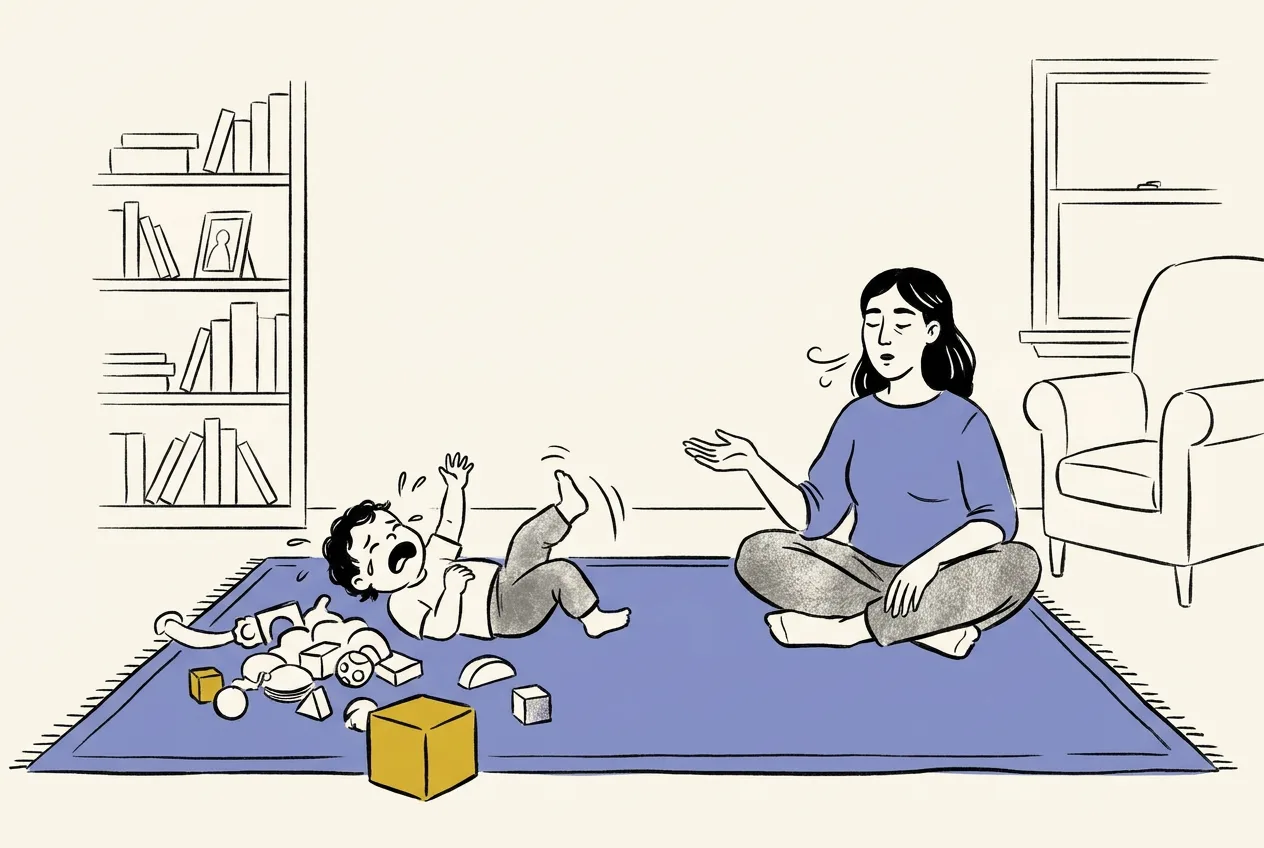
Tantrums are a normal part of development between ages 1 and 4: most young children have them, and most tantrums are over in a few minutes. Research shows a tantrum combines two emotions — anger, which peaks early, and distress, which follows. The best response is to stay calm and close, keep everyone safe, avoid giving in to the demand, and reconnect once it’s over. Very frequent, long or violent tantrums are worth discussing with a pediatrician.
- Most toddlers and preschoolers have tantrums; daily, intense ones are less common.
- Anger usually peaks in the first minute, then distress takes over — that’s when kids need comfort.
- Staying calm, consistent and connected works better than punishment or giving in.
Your two-year-old is lying face-down in the cereal aisle, screaming because you said no to the box with the cartoon on it. Everyone is looking at you. Take a breath: this is one of the most normal things a toddler can do.
How common tantrums are
Lauren Wakschlag and colleagues studied 1,490 preschoolers 3. Most children had tantrums at least sometimes. Daily tantrums were much less common, and certain features — very frequent, intense, unprovoked tantrums, or tantrums with many different adults — set apart children who might need extra help.
What happens during a tantrum
Michael Potegal and Richard Davidson analyzed detailed parent descriptions of hundreds of tantrums 1. They found that a tantrum combines two different emotions:
- Anger: yelling, kicking, throwing things. It usually peaks early.
- Distress: crying, whimpering, reaching for comfort. It tends to come later and fade more slowly.
Most tantrums were brief — usually just a few minutes 2. Trying to reason during the anger peak tends to prolong it; offering comfort once distress takes over helps a child recover.
Why toddlers melt down
A toddler’s brain is still building the circuits for self-control. They have big wants and few words, and tantrums spike when kids are tired, hungry, overstimulated or facing a transition.
What helps in the moment
- Stay calm. Your calm helps them borrow some. Breathe slowly.
- Keep everyone safe. Move breakables, gently stop hitting.
- Say less. “You’re really mad. I’m right here.” Skip the lecture.
- Don’t give in to the demand. If screaming gets the candy, screaming will happen again.
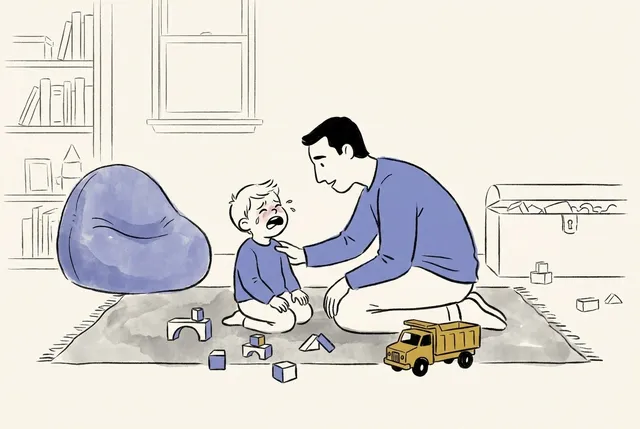
- Offer comfort when the anger fades. A hug, a lap, a sip of water.
- Reconnect afterward. “That was hard. You got through it.”
What helps prevent tantrums
- Protect naps, meals and bedtime routines.
- Give a heads-up before transitions: “Two more slides, then we go home.”
- Offer simple choices: “Red cup or blue cup?”
- Name feelings in calm moments so kids learn the words.
When to talk to your pediatrician
If tantrums happen many times a day, regularly last more than 20–25 minutes, involve hurting themselves or others, or are still frequent after age 5, bring it up at your child’s next checkup. Parent training programs like PCIT are very effective.
Frequently asked questions
Should I ignore a tantrum?
Ignore the demands and the screaming, not your child. Stay nearby, keep them safe, and be ready to comfort them when the anger fades.
When are tantrums a sign of a problem?
Talk to your pediatrician if tantrums happen many times a day, often last longer than 25 minutes, involve hurting others or themselves, come out of nowhere, or continue frequently after age 5.
Sources
- Potegal, M., & Davidson, R. J. (2003). Temper tantrums in young children: 1. Behavioral composition. Journal of Developmental & Behavioral Pediatrics, 24(3), 140–147. doi:10.1097/00004703-200306000-00002
- Potegal, M., Kosorok, M. R., & Davidson, R. J. (2003). Temper tantrums in young children: 2. Tantrum duration and temporal organization. Journal of Developmental & Behavioral Pediatrics, 24(3), 148–154. doi:10.1097/00004703-200306000-00003
- Wakschlag, L. S., Choi, S. W., Carter, A. S., et al. (2012). Defining the developmental parameters of temper loss in early childhood: Implications for developmental psychopathology. Journal of Child Psychology and Psychiatry, 53(11), 1099–1108. doi:10.1111/j.1469-7610.2012.02595.x
Evidence-based · Human-centered · Practical — how we write and fact-check our articles.
This article is for educational purposes and does not replace advice from a licensed professional. We cite original research and update articles when new evidence appears. Spotted an error? Let us know — see our editorial policy.
If you or someone you love is in crisis, call or text 988 (Suicide & Crisis Lifeline). Veterans: dial 988, then press 1.