Self-compassion: what it is and how to practice it as a parent
You yelled again. You forgot the field trip form. Self-criticism doesn’t make you a better parent — self-compassion might. Here’s what research says and how to start.
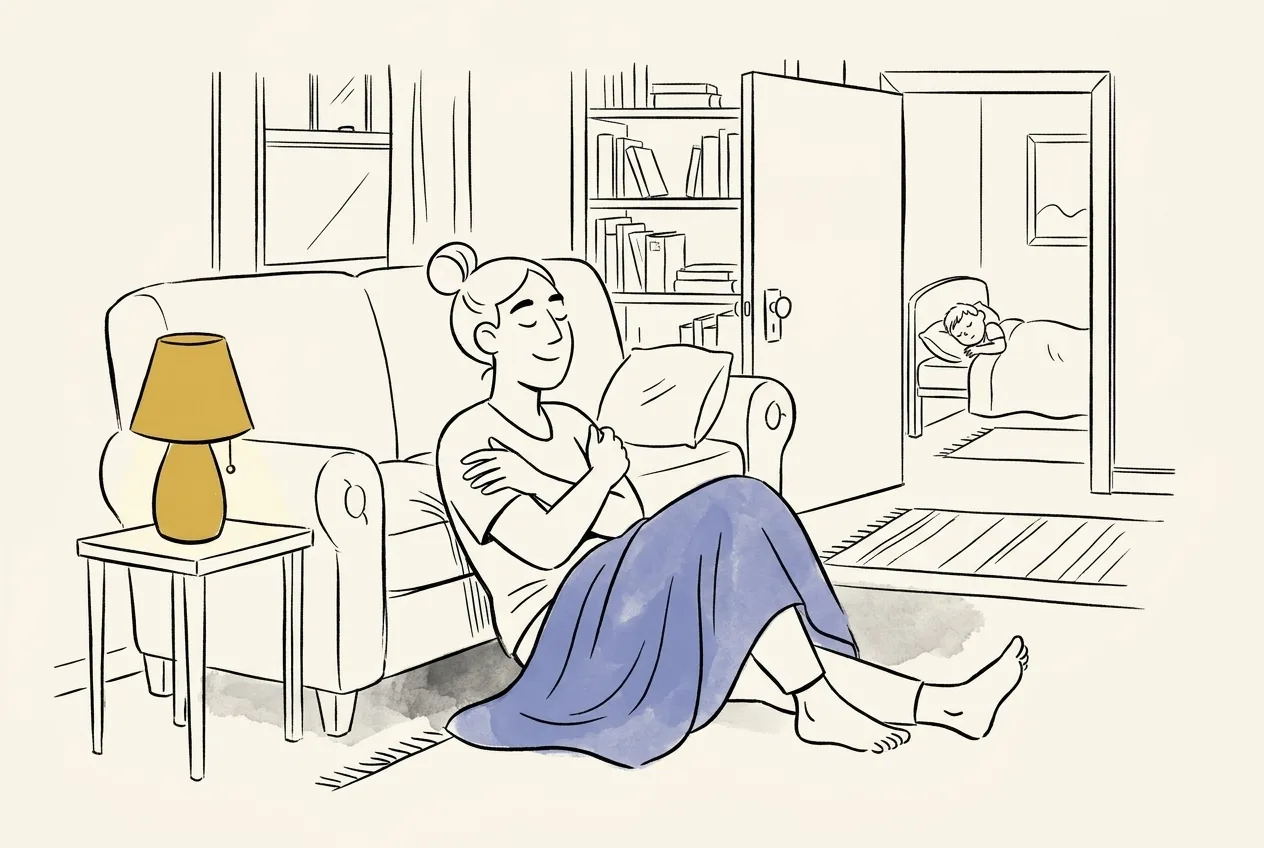
Self-compassion means treating yourself with the kindness you’d offer a good friend when you fail or struggle. It isn’t self-indulgence or lowering standards. Research links self-compassion to lower depression, anxiety and stress, and an eight-week program increased it in a randomized trial. For parents, self-compassion is a resource that helps protect against burnout.
- Self-compassion has three parts: kindness, common humanity and mindfulness.
- Higher self-compassion is strongly linked to less depression, anxiety and stress.
- It can be learned — structured programs increase it in weeks.
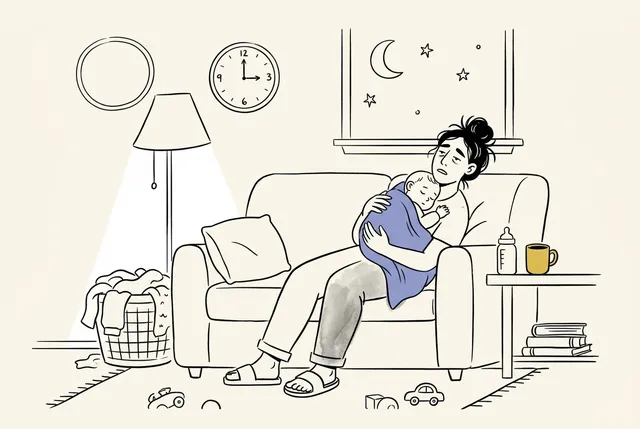
You snapped at your kids again. You forgot it was pajama day. You fed them chicken nuggets for the third night in a row. And now the inner critic is in full voice: “You’re a terrible parent.”
What if harsh self-criticism isn’t what makes us better parents?
What self-compassion is
Psychologist Kristin Neff describes three parts of self-compassion:
- Self-kindness instead of harsh judgment.
- Common humanity: remembering that every parent struggles and makes mistakes.
- Mindfulness: noticing painful feelings without ignoring or exaggerating them.
What research shows
Angus MacBeth and Andrew Gumley combined studies on self-compassion and mental health 1. People with more self-compassion had markedly lower levels of depression, anxiety and stress — one of the strongest links in this field.
Kristin Neff and Christopher Germer tested an eight-week Mindful Self-Compassion program in a randomized trial 2. Participants became more self-compassionate, mindful and satisfied with life, and less depressed, anxious and stressed. The gains lasted for months.
For parents, self-compassion is a resource that helps balance the heavy demands that lead to parental burnout 3.
How to practice
- Self-compassion break. In a hard moment, say: “This is really hard right now. Every parent struggles. May I be kind to myself.”
- Talk to yourself like a friend. What would you say to a friend who yelled at her kids after a long day?
- Soothing touch. A hand on your heart or a gentle hug. It sounds silly; it calms the body.
- Repair, don’t ruminate. Apologize to your child, then let it go. Kids learn more from repair than from perfection.
- Write yourself a letter from the perspective of a kind friend.
Self-compassion is not…
- Self-pity: it connects you to others rather than isolating you.
- Excuses: it makes it easier to own mistakes.
- Lowering standards: it helps you keep going after failure.
You don’t have to be a perfect parent. You have to be a present one — and that includes being present to yourself.
Frequently asked questions
Won’t being kind to myself make me lazy?
Research suggests the opposite. Self-compassionate people are more likely to take responsibility, apologize and try again, because failure feels less threatening.
How do I start if self-criticism is automatic?
Notice the critical voice, then ask: “What would I say to a friend in this situation?” Say that to yourself — even if it feels awkward at first.
Sources
- MacBeth, A., & Gumley, A. (2012). Exploring compassion: A meta-analysis of the association between self-compassion and psychopathology. Clinical Psychology Review, 32(6), 545–552. doi:10.1016/j.cpr.2012.06.003
- Neff, K. D., & Germer, C. K. (2013). A pilot study and randomized controlled trial of the Mindful Self-Compassion program. Journal of Clinical Psychology, 69(1), 28–44. doi:10.1002/jclp.21923
- Mikolajczak, M., Gross, J. J., & Roskam, I. (2019). Parental burnout: What is it, and why does it matter?. Clinical Psychological Science, 7(6), 1319–1329. doi:10.1177/2167702619858430
Evidence-based · Human-centered · Practical — how we write and fact-check our articles.
This article is for educational purposes and does not replace advice from a licensed professional. We cite original research and update articles when new evidence appears. Spotted an error? Let us know — see our editorial policy.
If you or someone you love is in crisis, call or text 988 (Suicide & Crisis Lifeline). Veterans: dial 988, then press 1.