Secondary trauma: when a service member’s PTSD affects the whole family
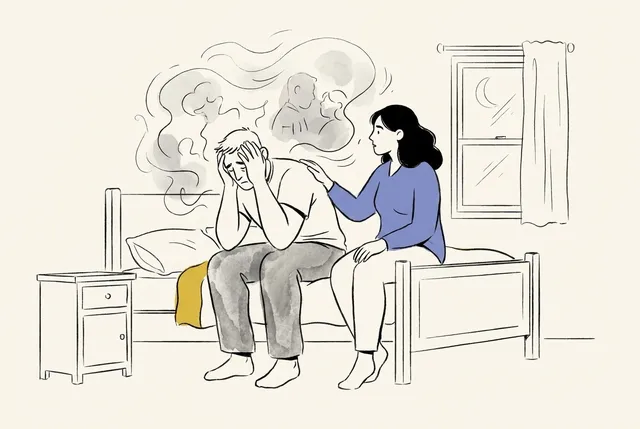
Living with someone who has PTSD can take a toll. Research shows partners and children of veterans with PTSD often have trauma symptoms and distress of their own.
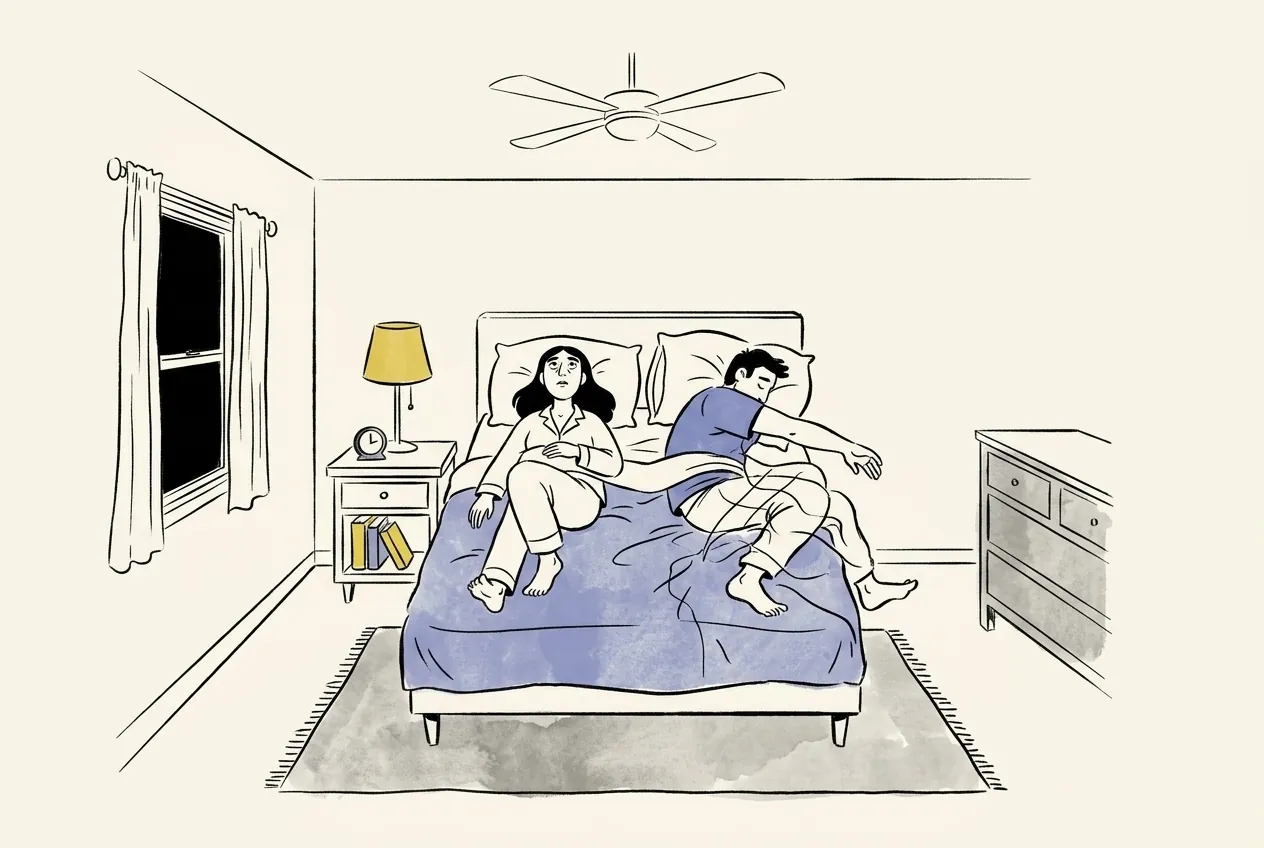
Partners and children of service members and veterans with PTSD often develop distress of their own — sometimes called secondary traumatic stress. Research shows a veteran’s PTSD is linked to lower relationship satisfaction and higher psychological distress in their partners, and to trauma symptoms in family members. Caregivers need support too, and getting it isn’t selfish.
- Family members can develop trauma-like symptoms without experiencing the trauma directly.
- A partner’s PTSD is linked to lower relationship quality and higher distress.
- Support for spouses and kids is part of treating PTSD.
You lie awake listening for his nightmares. You plan outings around crowds he can’t handle. You explain to the kids, again, why Dad got angry. You may have started to feel on edge, numb or exhausted yourself.
What research shows
Julia Diehle, Samantha Brooks and Neil Greenberg reviewed research on secondary traumatic stress in the families of veterans 1. Partners and children of veterans with PTSD often showed trauma-related symptoms themselves — intrusive thoughts, hypervigilance, anxiety and sleep problems — even though they hadn’t been through the trauma directly.
Jessica Lambert and colleagues combined studies on how PTSD affects intimate partners 2. A person’s PTSD symptoms were linked to lower relationship satisfaction and higher psychological distress in their partner, and the links were especially strong in military samples.
Signs you may be affected
- Constant worry, tension, being on guard.
- Trouble sleeping, nightmares.
- Feeling numb, hopeless or isolated.
- Anger, irritability, exhaustion.
- Avoiding friends or activities to keep the peace at home.
- Losing yourself in caregiving.
What helps
- Name it. Secondary trauma is a recognized response, not a weakness.
- Get your own support. Individual therapy, a spouse support group or a chaplain. Military OneSource offers free counseling for family members.
- Learn about PTSD so you can respond to symptoms rather than take them personally.
- Set boundaries. You can support your loved one without giving up your friends, work or health.
- Protect the kids. Explain in simple terms: “Dad has an injury inside called PTSD. It’s not your fault.”
- Involve the family in treatment where possible.
Resources for caregivers
- Military OneSource (800-342-9647) for active-duty and recently separated families.
- VA Caregiver Support Line: 1-855-260-3274 for caregivers of veterans.
- Vet Centers offer counseling to family members of eligible veterans.
If you or your loved one is in danger, call 911. If there’s violence at home, the National Domestic Violence Hotline (1-800-799-7233) can help.
Frequently asked questions
Is it wrong to feel angry at my spouse with PTSD?
No. Anger, grief, loneliness and exhaustion are common. Your feelings are real and deserve support, separate from your spouse’s treatment.
Should I join my spouse’s therapy?
Couple and family involvement can help a lot. Ask about Cognitive-Behavioral Conjoint Therapy or family sessions at the VA or with your provider.
Sources
- Diehle, J., Brooks, S. K., & Greenberg, N. (2017). Veterans are not the only ones suffering from posttraumatic stress symptoms: what do we know about dependents’ secondary traumatic stress?. Social Psychiatry and Psychiatric Epidemiology, 52(1), 35–44. doi:10.1007/s00127-016-1292-6
- Lambert, J. E., Engh, R., Hasbun, A., & Holzer, J. (2012). Impact of posttraumatic stress disorder on the relationship quality and psychological distress of intimate partners: A meta-analytic review. Journal of Family Psychology, 26(5), 729–737. doi:10.1037/a0029341
Evidence-based · Human-centered · Practical — how we write and fact-check our articles.
This article is for educational purposes and does not replace advice from a licensed professional. We cite original research and update articles when new evidence appears. Spotted an error? Let us know — see our editorial policy.
If you or someone you love is in crisis, call or text 988 (Suicide & Crisis Lifeline). Veterans: dial 988, then press 1.