Concussion and TBI: what families need to know
Headaches, memory problems, irritability, sensitivity to light and noise. Here’s what research says about mild traumatic brain injury in service members, recovery, and how families can help.
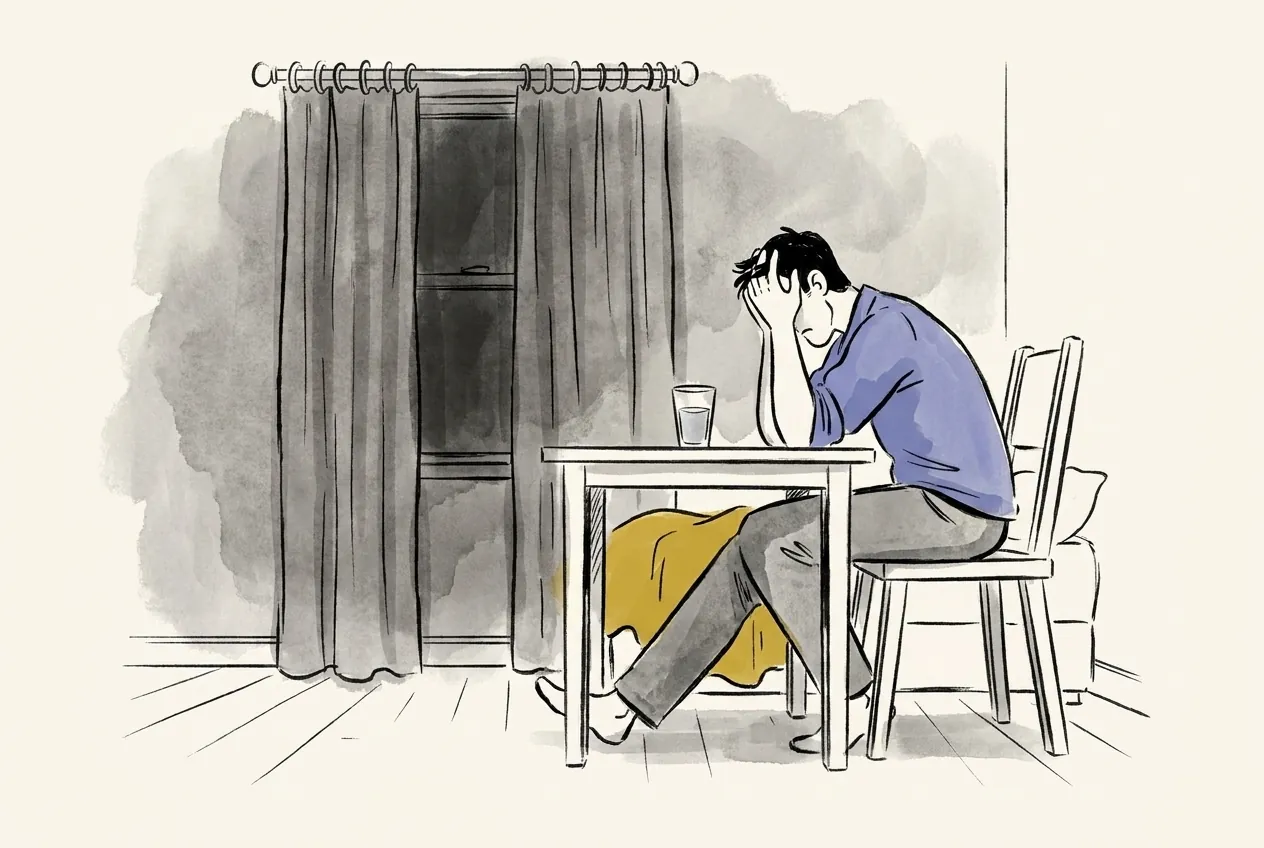
Mild traumatic brain injury (mTBI), often called concussion, is common among service members exposed to blasts and impacts. Most people recover within weeks to months. Research shows that lasting symptoms are often closely tied to PTSD and depression, which are treatable. Rest, a gradual return to activity, treating sleep and mental health problems, and family patience support recovery.
- Most people recover from mild TBI within weeks to a few months.
- Persistent symptoms often overlap with PTSD and depression.
- Treating sleep, headaches and mental health improves recovery.
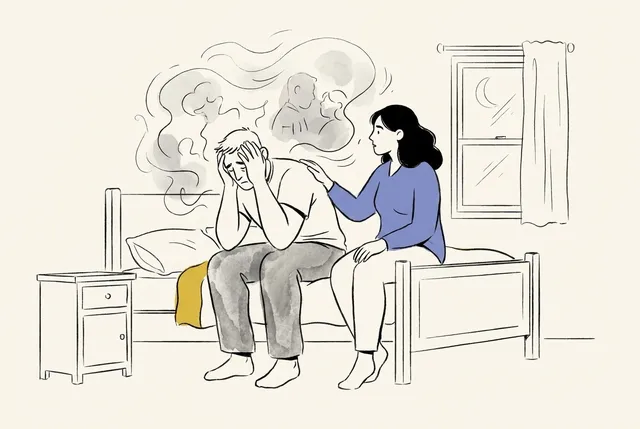
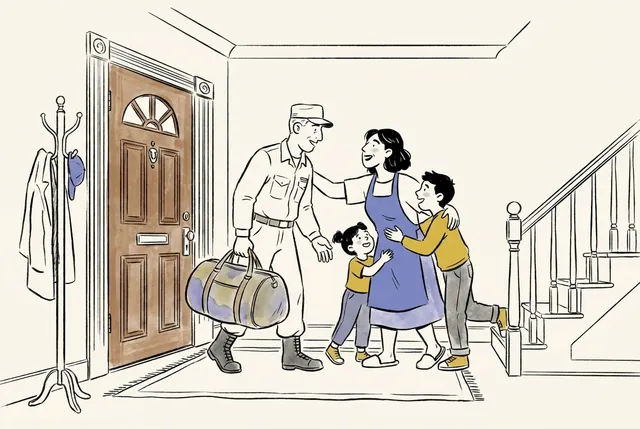
He came back from deployment saying he was “fine.” But he forgets appointments, gets headaches every afternoon, snaps at the kids over small things and can’t stand the noise at the mall. These can be signs of a traumatic brain injury (TBI).
What TBI is
A TBI happens when a blow, jolt or blast wave disrupts how the brain works. Mild TBI — concussion — may involve a brief loss of consciousness or just being dazed or confused. Moderate and severe TBIs involve longer unconsciousness and visible damage on brain scans.
Common symptoms of mild TBI include headaches, dizziness, trouble concentrating or remembering, fatigue, sensitivity to light and noise, irritability and sleep problems.
What research shows
Charles Hoge and colleagues surveyed more than 2,500 US Army infantry soldiers a few months after they returned from Iraq 1. About 15% reported an injury consistent with mild TBI. Soldiers with mTBI had more physical and mental health problems — but much of that link was explained by PTSD and depression. This suggests that treating PTSD and depression is a crucial part of helping service members with mild TBI.
Linda Carroll and colleagues reviewed studies on recovery after mild TBI for a World Health Organization task force 2. Most people recovered within 3 to 12 months. When symptoms persisted, they were often linked to factors like stress, depression and compensation issues rather than to the brain injury alone.
How families can help
- Simplify routines. Calendars, phone reminders and lists help with memory.
- Reduce overload. Quieter environments and shorter outings during recovery.
- Protect sleep and encourage limits on alcohol, which slows healing.
- Expect irritability and don’t take it personally — but don’t accept aggression.
- Encourage medical follow-up. Headaches, sleep problems and mood changes can all be treated.
- Watch for PTSD and depression, which often travel with TBI.
Where to get help
- Military treatment facilities and TRICARE for active-duty members.
- VA TBI and polytrauma programs for veterans.
- Brainline.org offers resources for families of service members with brain injuries.
- In a mental health crisis: dial 988, then press 1.
Frequently asked questions
Can one concussion cause permanent damage?
Most people recover fully from a single mild TBI. Repeated injuries and moderate or severe TBI carry higher risk, which is why medical follow-up matters.
What should I watch for right after a head injury?
Seek emergency care for a worsening headache, repeated vomiting, seizures, confusion, slurred speech, weakness or unusual drowsiness.
Sources
- Hoge, C. W., McGurk, D., Thomas, J. L., Cox, A. L. та ін. (2008). Mild Traumatic Brain Injury in U.S. Soldiers Returning from Iraq. New England Journal of Medicine, 358(5), 453–463. doi:10.1056/NEJMoa072972
- Carroll, L., Cassidy, J. D., Peloso, P., Borg, J. та ін. (2004). Prognosis for mild traumatic brain injury: results of the who collaborating centre task force on mild traumatic brain injury. Journal of Rehabilitation Medicine, 36(0), 84–105. doi:10.1080/16501960410023859
Evidence-based · Human-centered · Practical — how we write and fact-check our articles.
This article is for educational purposes and does not replace advice from a licensed professional. We cite original research and update articles when new evidence appears. Spotted an error? Let us know — see our editorial policy.
If you or someone you love is in crisis, call or text 988 (Suicide & Crisis Lifeline). Veterans: dial 988, then press 1.