What are attachment styles — and do they decide how you love?
Secure, anxious or avoidant: how early bonds shape the way we love as adults, what research says about attachment in marriage, and whether your style can change.
Attachment style (attachment pattern, secure, anxious, avoidant attachment) — a characteristic way of relating to close others — how much we trust they will be there, and how comfortable we are with closeness — first formed in childhood and carried into adult relationships.
Attachment styles describe how people handle closeness and fear of losing someone. Secure people trust and depend on partners comfortably; anxious people crave closeness but worry about being left; avoidant people feel uneasy with too much closeness. Research links insecure attachment to lower relationship satisfaction for both partners — but styles are not destiny and can shift with supportive relationships and therapy.
- Adult attachment was first described in 1987 as an extension of how infants bond with caregivers.
- Both anxious and avoidant attachment are linked to lower satisfaction — in yourself and in your partner.
- Attachment can become more secure through a steady relationship, self-awareness and therapy.
Why do some people text back instantly and need constant reassurance, while others pull away the moment things get serious? Attachment theory offers one of the best-studied answers.
Where the idea comes from
Psychiatrist John Bowlby and psychologist Mary Ainsworth showed that babies develop expectations about whether caregivers will be there when they’re scared or upset. In 1987, Cindy Hazan and Phillip Shaver proposed that similar patterns play out in romantic love 1. They ran a “love quiz” in a newspaper and found that adults described their relationships in ways that mapped onto the infant patterns: most described themselves as secure, about a quarter as avoidant and about a fifth as anxious.
The three main styles
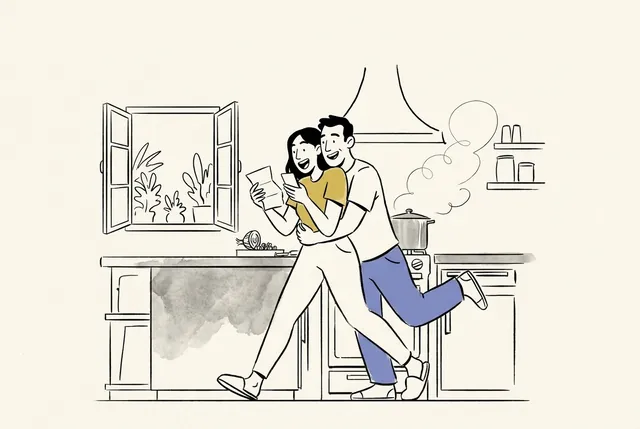
- Secure. You find it fairly easy to get close, you can rely on your partner and let them rely on you, and you don’t spend much time worrying about being abandoned.
- Anxious. You want a lot of closeness and reassurance and worry that your partner doesn’t love you as much as you love them. A slow reply can feel like a crisis.
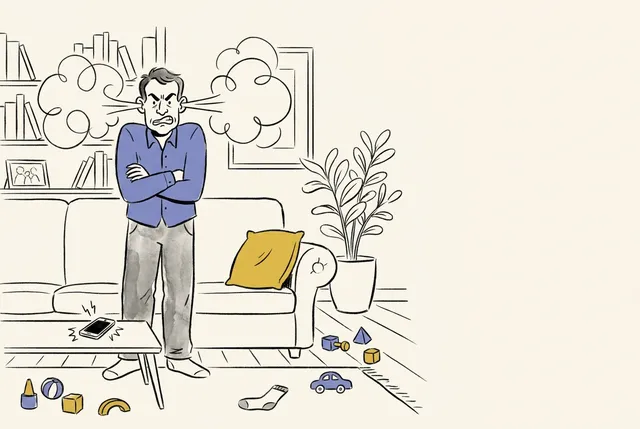
- Avoidant. Closeness makes you uncomfortable. You value independence, find it hard to depend on others, and may withdraw when your partner wants more intimacy.
Today, researchers mostly treat attachment as two sliding scales — anxiety and avoidance — rather than three boxes.
How it affects a marriage
A meta-analysis by Octav-Sorin Candel and Maria Nicoleta Turliuc pooled dozens of studies 2. Both attachment anxiety and avoidance were linked to lower relationship satisfaction — not only for the person with that style, but for their partner too. Avoidance showed an especially consistent link.
A familiar dance is the anxious–avoidant trap: one partner pursues (“We need to talk!”), the other withdraws (“I need space”), which makes the first pursue harder.
Can your style change?
Yes. Attachment is a pattern, not a life sentence. People often become more secure through:
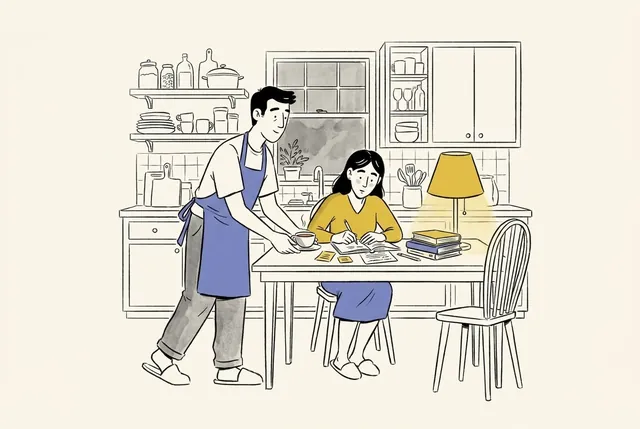
- A steady, responsive partner who shows up reliably over time.
- Naming the pattern out loud: “I’m getting anxious because you went quiet. Can you tell me we’re okay?”
- Therapy. Emotionally Focused Couples Therapy (EFT) is built directly on attachment theory.
Try this
Ask each other: “When you’re stressed, do you want me closer or do you need room first?” Knowing the answer turns a frustrating dance into something you can plan for.
Frequently asked questions
Can two insecurely attached people have a happy relationship?
Yes. Knowing your patterns helps you catch them in the moment. Many couples become more secure together over time, especially with therapy such as Emotionally Focused Therapy.
Are online attachment quizzes accurate?
They can start a useful conversation, but they’re not a diagnosis. Researchers usually measure attachment on two dimensions — anxiety and avoidance — rather than in neat boxes.
Sources
- Hazan, C., & Shaver, P. (1987). Romantic love conceptualized as an attachment process. Journal of Personality and Social Psychology, 52(3), 511–524. doi:10.1037/0022-3514.52.3.511
- Candel, O.-S., & Turliuc, M. N. (2019). Insecure attachment and relationship satisfaction: A meta-analysis of actor and partner associations. Personality and Individual Differences, 147, 190–199. doi:10.1016/j.paid.2019.04.037
Evidence-based · Human-centered · Practical — how we write and fact-check our articles.
This article is for educational purposes and does not replace advice from a licensed professional. We cite original research and update articles when new evidence appears. Spotted an error? Let us know — see our editorial policy.
If you or someone you love is in crisis, call or text 988 (Suicide & Crisis Lifeline). Veterans: dial 988, then press 1.