How to fight fair: resolving conflict without damaging your relationship
Every couple argues. Research shows what separates healthy conflict from the kind that wears a marriage down — and how to argue so you end up closer.
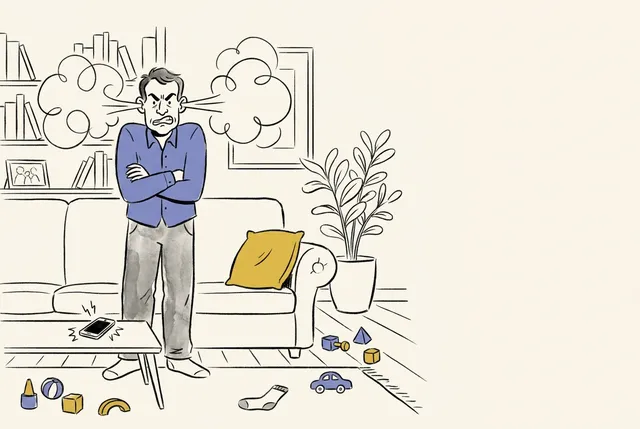
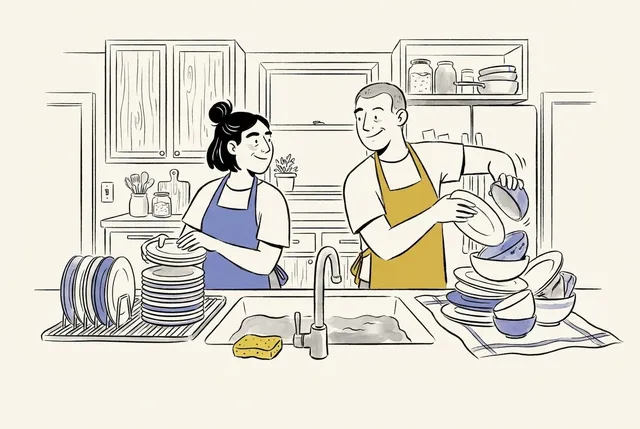
Healthy couples argue too. The difference is in how they start, how they listen and how they repair. Research by John Gottman shows that a soft start-up, accepting your partner’s influence, staying calm and making repair attempts predict happier, more stable marriages — while harsh openings and escalation predict trouble.
- How a conversation starts usually predicts how it ends.
- Partners who accept each other’s influence have more stable marriages.
- Repair attempts — a joke, a touch, “Let’s start over” — keep conflict from spiraling.
“We never fight” isn’t necessarily a good sign. Conflict is how two different people work out a shared life. The question is whether your arguments bring you closer or slowly wear you down.
What separates a healthy fight
In a 1992 study, Gottman and Levenson divided couples into two groups based on how their conflict conversations unfolded 1. In “regulated” couples, positive moments outweighed negative ones even during disagreements. In “unregulated” couples, negativity dominated. Four years later, the unregulated couples were much more likely to have considered divorce or separated.
Later, Gottman’s team observed 130 newlywed couples 2. What predicted which marriages would last and be happy wasn’t whether couples got angry. It was whether conversations began harshly, whether husbands accepted influence from their wives, whether partners de-escalated and whether they kept positive emotion — humor, affection, interest — alive during conflict.
Seven rules for fighting fair
- Start soft. “I feel overwhelmed with the kids’ schedules. Can we sit down Sunday and split them up?” works better than “You never help.”
- One issue at a time. Leave last year’s Thanksgiving out of today’s argument about money.
- Complain, don’t criticize. Describe the behavior, not your partner’s character.
- Accept influence. Look for the part of your partner’s view that makes sense. Saying “That’s a fair point” isn’t losing.
- Watch for flooding. When your heart is pounding and you can’t think straight, take a 20–30 minute break. Agree on when you’ll come back.
- Use repair attempts. A silly face, “Can we start over?”, “I’m on your side here.” And when your partner makes one — take it.
- End with a next step, even a small one: “Let’s try it this way for two weeks and check in.”
After the argument
Talk briefly about the fight itself once you’re both calm: what hurt, what you each needed, what you’ll try next time. Couples who can process a fight afterward grow more confident that they can handle the next one.
If you’re afraid of your partner, or arguments involve threats, control or violence, these rules don’t apply. Reach out to the National Domestic Violence Hotline at 1-800-799-7233 or see Get help now.
Frequently asked questions
Is it okay to go to bed angry?
Sometimes it’s the wisest choice. If you’re both exhausted or flooded, agree to pick it up in the morning. Unresolved isn’t the same as ignored.
What if my partner refuses to talk about problems?
Try choosing a calm moment, keeping it short and specific, and starting with what you need. If avoidance is a pattern, a couples therapist can help.
Sources
- Gottman, J. M., & Levenson, R. W. (1992). Marital processes predictive of later dissolution: Behavior, physiology, and health. Journal of Personality and Social Psychology, 63(2), 221–233. doi:10.1037/0022-3514.63.2.221
- Gottman, J. M., Coan, J., Carrere, S., & Swanson, C. (1998). Predicting marital happiness and stability from newlywed interactions. Journal of Marriage and the Family, 60(1), 5–22. doi:10.2307/353438
Evidence-based · Human-centered · Practical — how we write and fact-check our articles.
This article is for educational purposes and does not replace advice from a licensed professional. We cite original research and update articles when new evidence appears. Spotted an error? Let us know — see our editorial policy.
If you or someone you love is in crisis, call or text 988 (Suicide & Crisis Lifeline). Veterans: dial 988, then press 1.