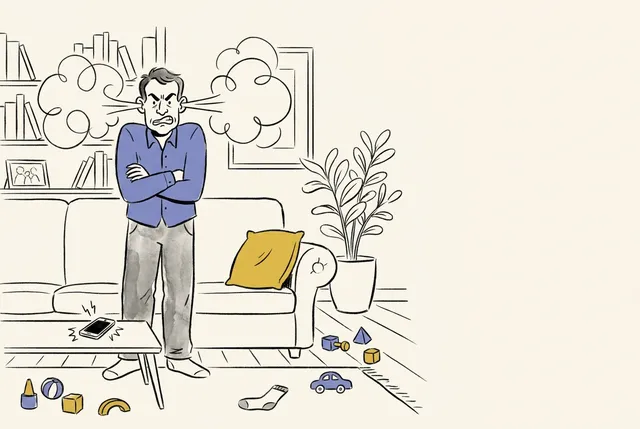
Perpetual problems: why some arguments never get solved — and why that’s okay
Neat versus messy, saver versus spender, homebody versus social butterfly. Most couples argue about the same things for years. Here’s how to live with it well.

Many couple conflicts are perpetual: they grow out of lasting differences in personality, values or needs, and they don’t go away. Research by John Gottman shows that couples’ patterns of interaction stay fairly stable over the years. Happy couples aren’t the ones who solve every problem, but the ones who can talk about their recurring differences with humor and respect instead of gridlock.
- Many conflicts stem from lasting differences and won’t ever be fully “solved.”
- The goal is dialogue, not victory: understanding the dream or need behind each position.
- For serious, changeable problems, direct and even blunt conversation can help.
She wants to leave for the airport three hours early. He thinks 90 minutes is plenty. You’ve had this argument before every vacation for ten years. Sound familiar?
What research shows
John Gottman and Robert Levenson observed married couples in the lab and invited them back years later 1. How couples interacted during conflict turned out to be remarkably stable over time. In his books, Gottman estimates that about two-thirds of couples’ conflicts are perpetual — they come from lasting differences in personality, values and needs.
Nickola Overall and James McNulty, reviewing research on conflict communication, added an important nuance 2. For problems that are serious and can change — like one partner’s gambling or drinking — direct, even blunt communication may help in the long run, despite feeling bad in the moment. For problems that are tied to stable personality differences, softer, accepting approaches tend to work better.
Gridlock vs. dialogue
Perpetual problems are not the danger. Gridlock is: the same argument with rising hurt, each person digging in, neither feeling understood. Couples in dialogue can talk about the same issue with humor and warmth: “Okay, Mr. Three-Hours-Early, let’s compromise at two.”
How to move from gridlock to dialogue
- Look for the dream behind the position. Leaving early might be about feeling safe and in control; leaving late might be about not wasting time. Ask: “What does this mean to you?”
- Don’t aim to change your partner’s personality. Aim for a workable arrangement.
- Find a small area of flexibility each of you can live with.
- Use humor. Shared jokes about your differences are a sign of a healthy couple.
- Separate serious problems. If the issue involves safety, addiction or betrayal, say so directly and consider professional help.
A useful question
Next time the familiar argument starts, try asking: “Is this a problem we need to solve, or a difference we need to understand?” That question alone often lowers the temperature.
Frequently asked questions
How do I know if a problem is perpetual or solvable?
If you’ve had the same argument many times over years, and it’s rooted in who you each are (tidy vs. relaxed, planner vs. spontaneous), it’s probably perpetual. Solvable problems are more situational.
Should we just stop talking about it then?
No. Avoiding perpetual problems leads to gridlock and distance. Keep talking — but aim for understanding and compromise, not for changing your partner.
Sources
- Gottman, J. M., & Levenson, R. W. (1999). What predicts change in marital interaction over time? A study of alternative models. Family Process, 38(2), 143–158. doi:10.1111/j.1545-5300.1999.00143.x
- Overall, N. C., & McNulty, J. K. (2017). What type of communication during conflict is beneficial for intimate relationships?. Current Opinion in Psychology, 13, 1–5. doi:10.1016/j.copsyc.2016.03.002
Evidence-based · Human-centered · Practical — how we write and fact-check our articles.
This article is for educational purposes and does not replace advice from a licensed professional. We cite original research and update articles when new evidence appears. Spotted an error? Let us know — see our editorial policy.
If you or someone you love is in crisis, call or text 988 (Suicide & Crisis Lifeline). Veterans: dial 988, then press 1.