What actually helps with anxiety?
Constant worry, a racing mind, a knot in your stomach. Here’s what research shows helps most — from CBT to exercise — and simple steps you can start today.
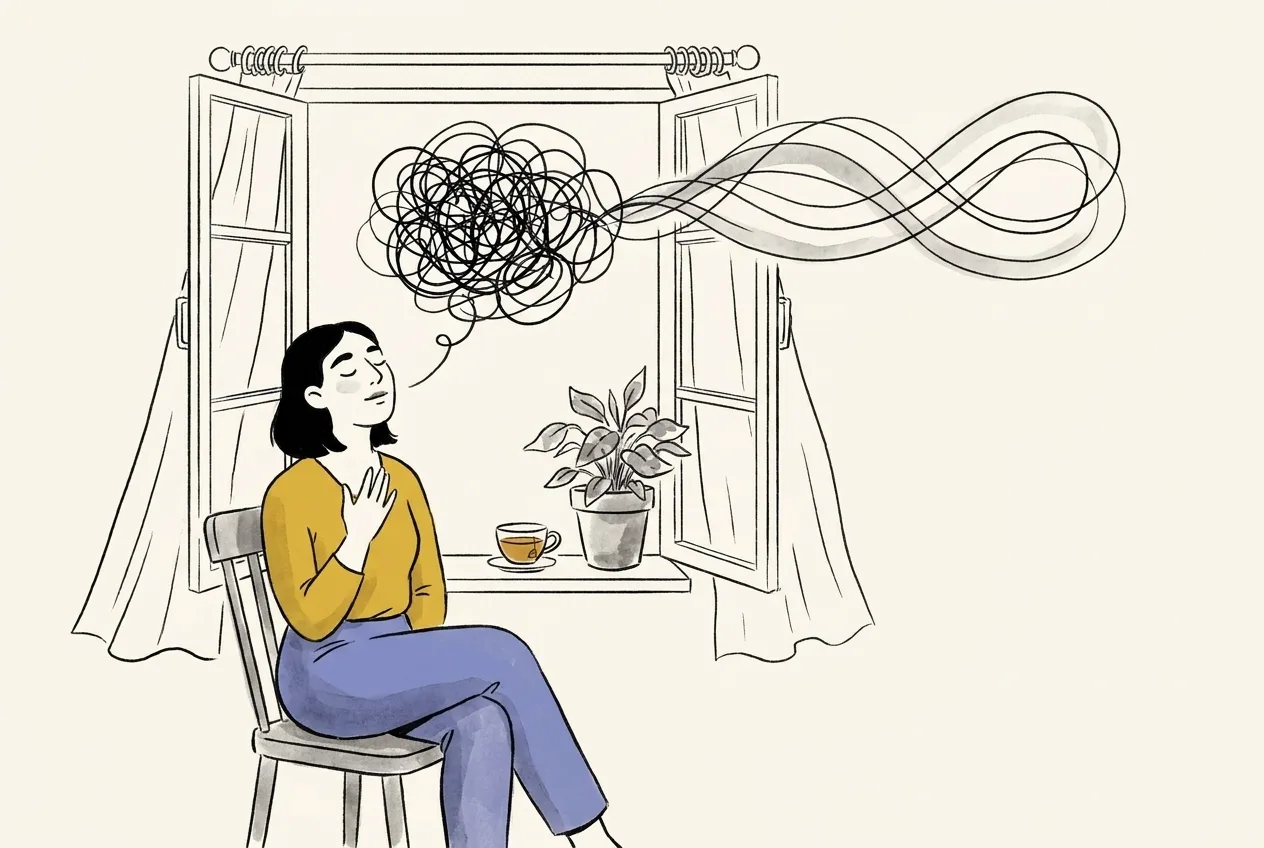
The best-supported treatment for anxiety is cognitive behavioral therapy (CBT), which helps people understand anxious thinking and gradually face what they avoid. Regular exercise also reduces anxiety symptoms. Day-to-day, it helps to stop avoiding, set aside “worry time,” protect sleep, cut back on caffeine and alcohol, and practice slow breathing. If anxiety interferes with daily life for weeks, talk to a professional.
- CBT outperforms placebo for anxiety disorders in randomized trials.
- Exercise has a measurable anxiety-reducing effect.
- Avoidance relieves anxiety short-term but strengthens it long-term.
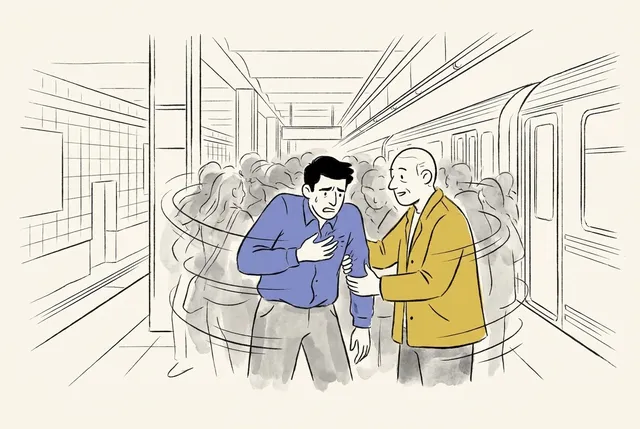
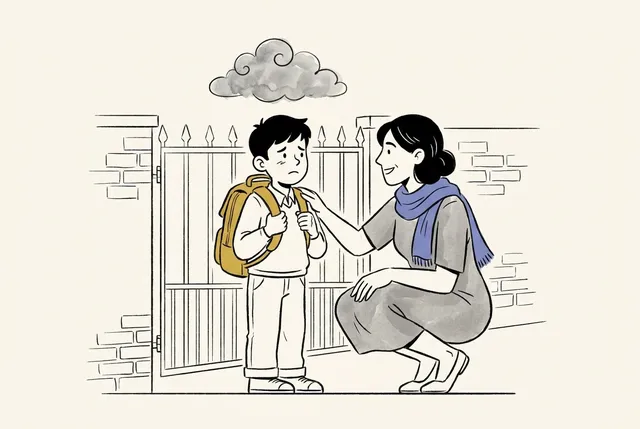
A knot in your stomach before every meeting. Lying awake running through worst-case scenarios. Checking the news again and again. Anxiety is the most common mental health problem in the US — and one of the most treatable.
What research shows works
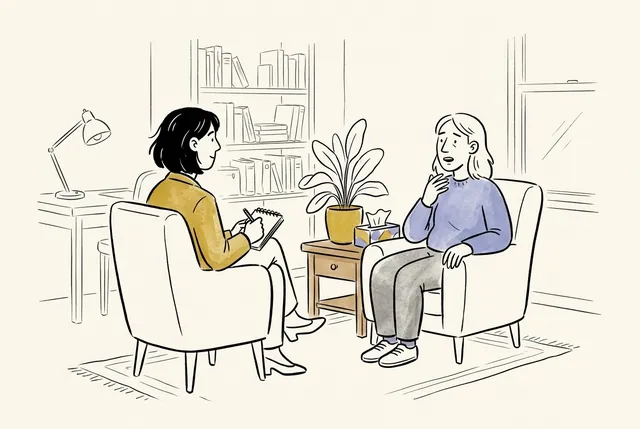
Cognitive behavioral therapy. Joseph Carpenter and colleagues analyzed randomized trials that compared CBT with a placebo condition for anxiety and related disorders 1. CBT was more effective than placebo, with the strongest effects for generalized anxiety disorder, obsessive-compulsive disorder and acute stress disorder. CBT helps you notice anxious thoughts, question them, and gradually stop avoiding what scares you.
Exercise. Brendon Stubbs and colleagues analyzed trials of exercise for people with anxiety and stress-related disorders 2. Exercise reduced anxiety symptoms compared with control conditions, and higher-intensity programs tended to work better.
Seven steps you can start today
- Notice avoidance. What are you putting off or steering around because of anxiety? Pick one small step toward it.
- Schedule “worry time.” Fifteen minutes a day to write down your worries. When they show up at other times, remind yourself: “Later.”
- Move your body. A brisk walk, a bike ride, a workout — most days of the week.
- Breathe slowly. Exhaling longer than you inhale calms the nervous system.
- Cut back on caffeine and alcohol. Both can worsen anxiety and sleep.
- Limit news and doomscrolling, especially before bed.
- Talk to someone. Saying worries out loud often shrinks them.
When to get professional help
If anxiety lasts for weeks, interferes with work, sleep, relationships or parenting, or comes with panic attacks, talk to your doctor or a therapist trained in CBT. See How to find a therapist.
If anxiety comes with thoughts of suicide or self-harm, call or text 988.
Frequently asked questions
Can I treat anxiety without medication?
Yes, many people improve with CBT, exercise and lifestyle changes. For moderate to severe anxiety, medication can also help — it’s a decision to make with your doctor.
Does mindfulness help with anxiety?
Mindfulness-based programs can reduce anxiety for many people, especially as part of a broader plan. They’re not a replacement for treatment when anxiety is severe.
Sources
- Carpenter, J. K., Andrews, L. A., Witcraft, S. M., Powers, M. B., Smits, J. A. J., & Hofmann, S. G. (2018). Cognitive behavioral therapy for anxiety and related disorders: A meta-analysis of randomized placebo-controlled trials. Depression and Anxiety, 35(6), 502–514. doi:10.1002/da.22728
- Stubbs, B., Vancampfort, D., Rosenbaum, S., Firth, J. та ін. (2017). An examination of the anxiolytic effects of exercise for people with anxiety and stress-related disorders: A meta-analysis. Psychiatry Research, 249, 102–108. doi:10.1016/j.psychres.2016.12.020
Evidence-based · Human-centered · Practical — how we write and fact-check our articles.
This article is for educational purposes and does not replace advice from a licensed professional. We cite original research and update articles when new evidence appears. Spotted an error? Let us know — see our editorial policy.
If you or someone you love is in crisis, call or text 988 (Suicide & Crisis Lifeline). Veterans: dial 988, then press 1.