How to recognize a panic attack — and what to do about it
A pounding heart, chest pain, the feeling you’re dying or losing control. Panic attacks are terrifying but not dangerous. Here’s how to recognize them and what treatment works.
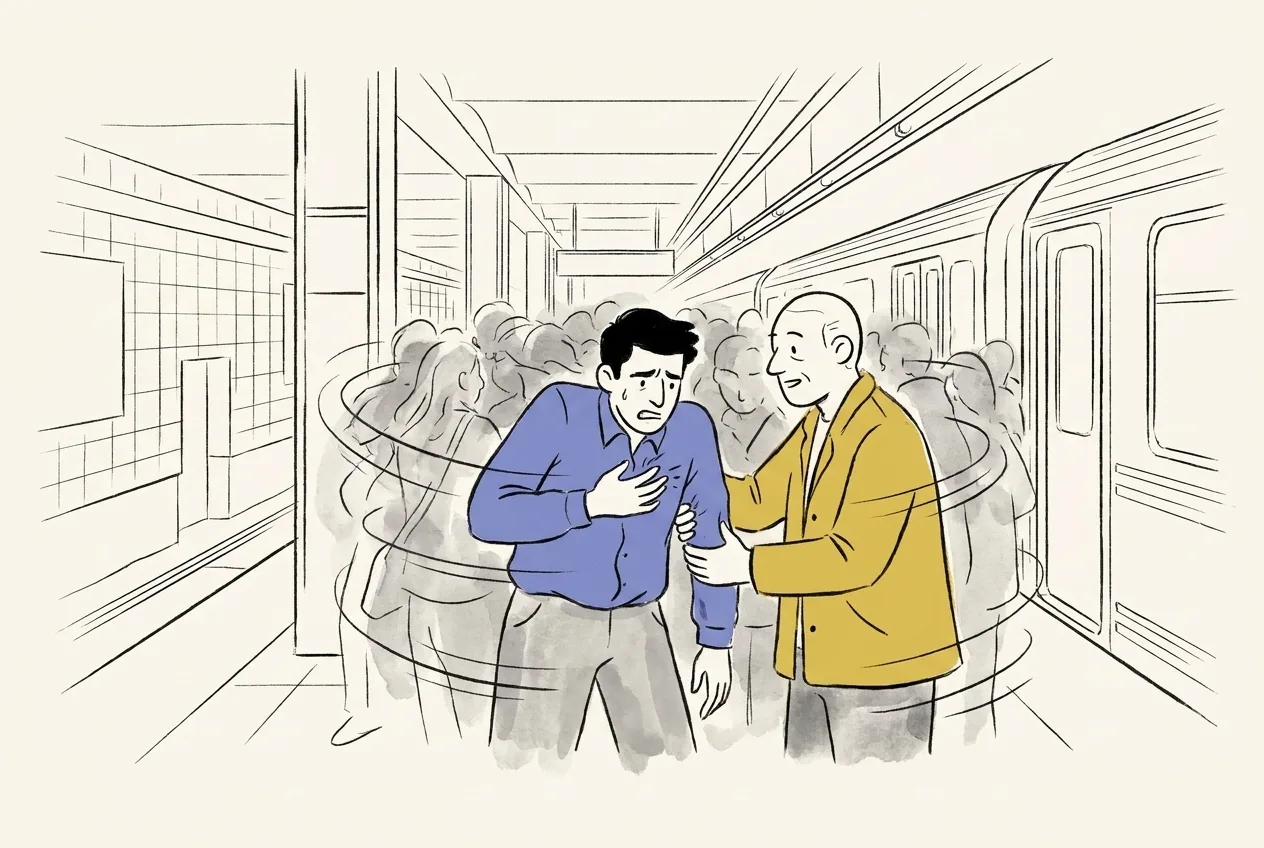
A panic attack is a sudden surge of intense fear that peaks within minutes, with physical symptoms like a racing heart, shortness of breath, chest pain, dizziness and a feeling of doom. Panic attacks feel dangerous but aren’t harmful in themselves. Cognitive behavioral therapy is the best-supported treatment for panic disorder. If you have chest pain for the first time, get checked by a doctor.
- Panic attacks peak within about 10 minutes and pass on their own.
- Fear of the next attack and avoiding places is what turns attacks into panic disorder.
- CBT is the most effective psychological treatment for panic disorder.
Your heart pounds. You can’t catch your breath. Your chest tightens, your hands tingle, and you’re sure you’re having a heart attack or going crazy. Ten minutes later, it fades — leaving you shaken. That was likely a panic attack.
What a panic attack is
Michelle Craske and Murray Stein describe a panic attack as a sudden surge of intense fear or discomfort that peaks within minutes 1. Common symptoms include:
- racing or pounding heart;
- shortness of breath, a feeling of choking;
- chest pain or tightness;
- dizziness, lightheadedness;
- sweating, trembling, chills or hot flashes;
- numbness or tingling;
- feeling unreal or detached;
- fear of losing control, going crazy or dying.
Many people have a panic attack at some point. Panic disorder develops when attacks repeat and you start living in fear of the next one — avoiding driving, stores, crowds or exercise.
Why it happens
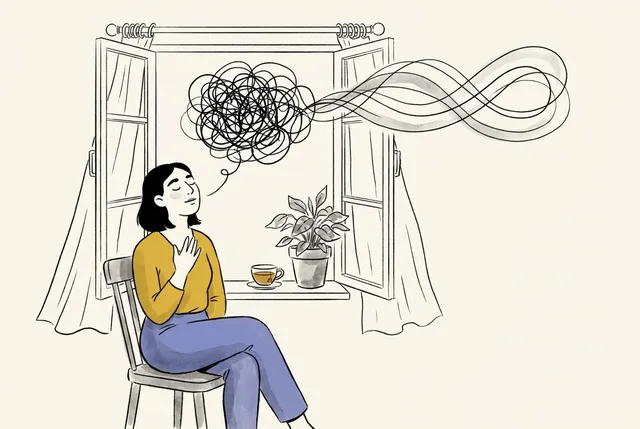
A panic attack is your body’s alarm system — the fight-or-flight response — going off when there’s no real danger. Then a vicious cycle starts: you notice a body sensation, interpret it as dangerous (“My heart is racing — something’s wrong”), get more scared, and the sensation intensifies.
What helps in the moment
- Name it: “This is a panic attack. It’s uncomfortable, not dangerous. It will pass.”
- Breathe slowly: in for about 4 seconds, out for about 6.
- Don’t fight it or run. Let the wave rise and fall.
- Ground yourself: name five things you can see, four you can hear, three you can touch.
What treatment works
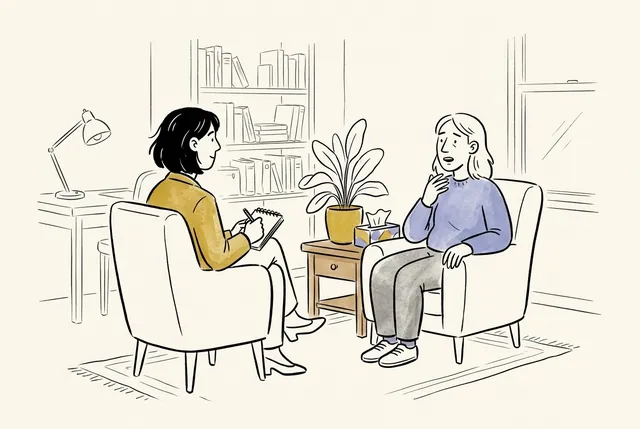
Alessandro Pompoli and colleagues compared psychological therapies for panic disorder in a network meta-analysis 2. Cognitive behavioral therapy had the most consistent evidence. CBT for panic teaches you to understand the cycle, test catastrophic thoughts and gradually face feared sensations and situations. SSRI medications are also effective.
When to see a doctor
Get a medical checkup for new or unexplained symptoms. If you have chest pain and aren’t sure it’s panic — especially the first time — call 911. If panic is limiting your life, talk to your doctor or a therapist trained in CBT.
Frequently asked questions
How do I know it’s a panic attack and not a heart attack?
You can’t always tell on your own. If it’s your first episode of chest pain, if you have heart risk factors, or symptoms feel different from your usual panic attacks, call 911.
Should I avoid places where I had panic attacks?
Avoidance brings short-term relief but makes panic stronger over time. Gradually returning to those places, ideally with a therapist’s guidance, is how recovery happens.
Sources
- Craske, M. G., & Stein, M. B. (2016). Anxiety. The Lancet, 388(10063), 3048–3059. doi:10.1016/S0140-6736(16)30381-6
- Pompoli, A., Furukawa, T. A., Imai, H., Tajika, A., Efthimiou, O., & Salanti, G. (2016). Psychological therapies for panic disorder with or without agoraphobia in adults: A network meta-analysis. Cochrane Database of Systematic Reviews, 4, CD011004. doi:10.1002/14651858.CD011004.pub2
Evidence-based · Human-centered · Practical — how we write and fact-check our articles.
This article is for educational purposes and does not replace advice from a licensed professional. We cite original research and update articles when new evidence appears. Spotted an error? Let us know — see our editorial policy.
If you or someone you love is in crisis, call or text 988 (Suicide & Crisis Lifeline). Veterans: dial 988, then press 1.