How to tell if your child has an anxiety problem
All kids worry sometimes. Here’s how to tell normal fears from an anxiety disorder, how common childhood anxiety is, and which treatments work best.
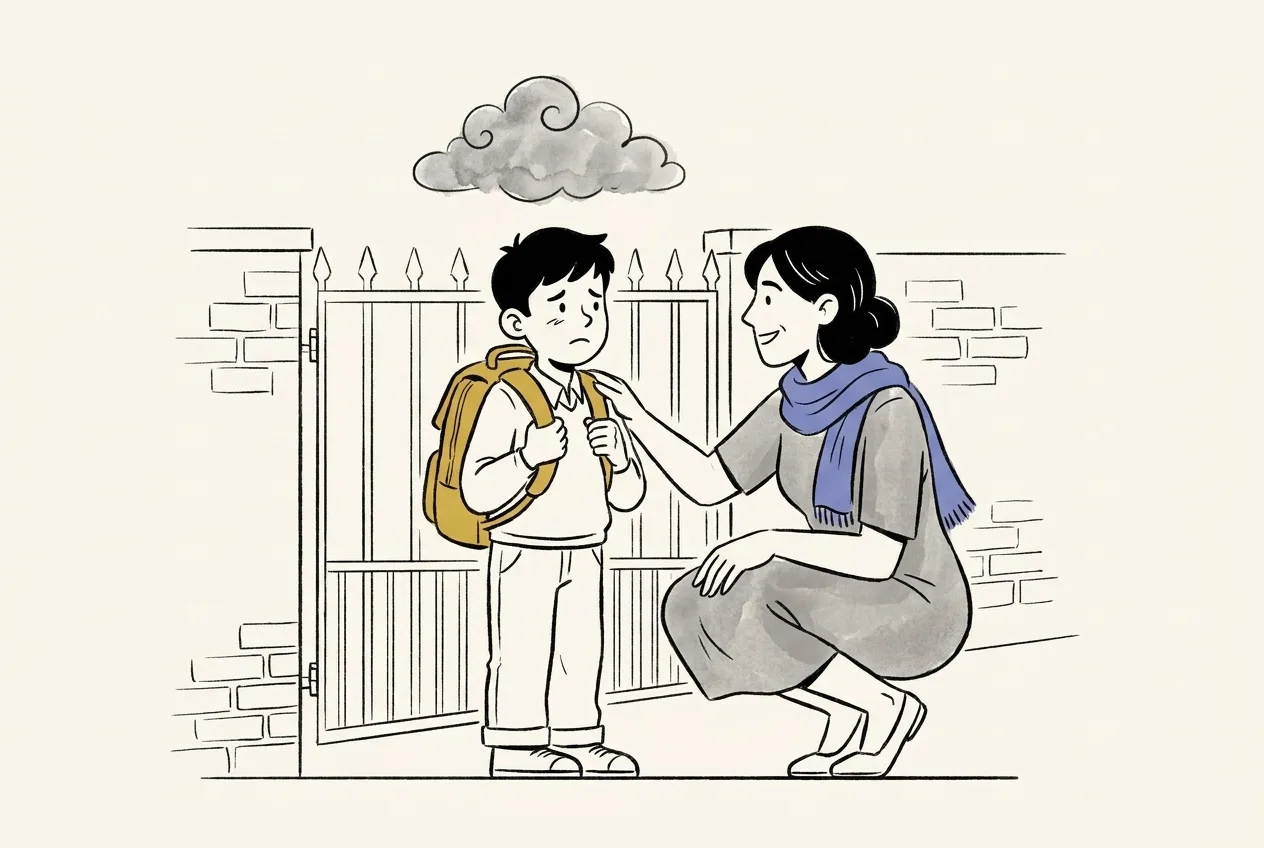
Anxiety disorders are among the most common mental health problems in children worldwide. Worry becomes a problem when it’s intense, lasts for months and gets in the way of school, friendships, sleep or family life. Cognitive behavioral therapy (CBT) is the best-supported treatment, and about half of children no longer meet criteria for their main anxiety disorder after a course of it. Parents help most by gently encouraging kids to face fears instead of avoiding them.
- Anxiety disorders affect a significant share of children and teens worldwide.
- Avoidance keeps anxiety going; gradual, supported exposure shrinks it.
- CBT, which often involves parents, is the first-line treatment.
Fear of the dark, nervousness before a test, clinging on the first day of school — these are a normal part of growing up. But for some children, worry takes over.
How common anxiety is
Guilherme Polanczyk and colleagues pooled data from dozens of studies around the world 1. Anxiety disorders were the most common mental health problems in children and adolescents, affecting about 1 in 15 at any given time.
Normal worry or an anxiety disorder?
Ask three questions:
- Is it out of proportion? The fear is much bigger than the situation.
- Does it last? Weeks and months, not days.
- Does it get in the way? Avoiding school, birthday parties, sleepovers or sleeping alone; frequent meltdowns.
Common signs include stomachaches and headaches, trouble sleeping, constant “what if” questions, needing lots of reassurance, perfectionism and avoiding new situations.
What works
A Cochrane review led by Anthony James analyzed dozens of clinical trials of cognitive behavioral therapy (CBT) for childhood anxiety 2. CBT was clearly more effective than waiting lists or no treatment: about half of children were free of their main anxiety disorder after treatment. CBT teaches kids to understand anxiety, challenge anxious thoughts and gradually face their fears, often with parents as coaches.
How parents can help
- Validate the feeling, encourage the step: “I know this feels scary. I also know you can do hard things.”
- Avoid too much reassurance. Answering the same worry over and over keeps anxiety going.
- Don’t remove every trigger. Gradual practice — a short playdate, then a longer one — builds courage.
- Praise brave behavior, not just outcomes.
- Manage your own anxiety. Kids pick up on it.
- Keep routines for sleep, food and activity.
When to get help
Talk to your pediatrician or a child therapist if anxiety lasts for weeks and interferes with daily life. Look for a therapist trained in CBT for children. If your child talks about wanting to die or hurting themselves, call or text 988 right away.
Frequently asked questions
Should I let my child stay home when they’re anxious about school?
Occasional mental health days are fine, but regular avoidance makes anxiety stronger. Work with the school on a gradual plan to keep your child attending.
Does my child need medication?
CBT is usually tried first. For moderate to severe anxiety, a doctor may add an SSRI medication, which also has good evidence.
Sources
- Polanczyk, G. V., Salum, G. A., Sugaya, L. S., Caye, A., & Rohde, L. A. (2015). Annual Research Review: A meta-analysis of the worldwide prevalence of mental disorders in children and adolescents. Journal of Child Psychology and Psychiatry, 56(3), 345–365. doi:10.1111/jcpp.12381
- James, A. C., Reardon, T., Soler, A., James, G., & Creswell, C. (2020). Cognitive behavioural therapy for anxiety disorders in children and adolescents. Cochrane Database of Systematic Reviews, 11, CD013162. doi:10.1002/14651858.CD013162.pub2
Evidence-based · Human-centered · Practical — how we write and fact-check our articles.
This article is for educational purposes and does not replace advice from a licensed professional. We cite original research and update articles when new evidence appears. Spotted an error? Let us know — see our editorial policy.
If you or someone you love is in crisis, call or text 988 (Suicide & Crisis Lifeline). Veterans: dial 988, then press 1.