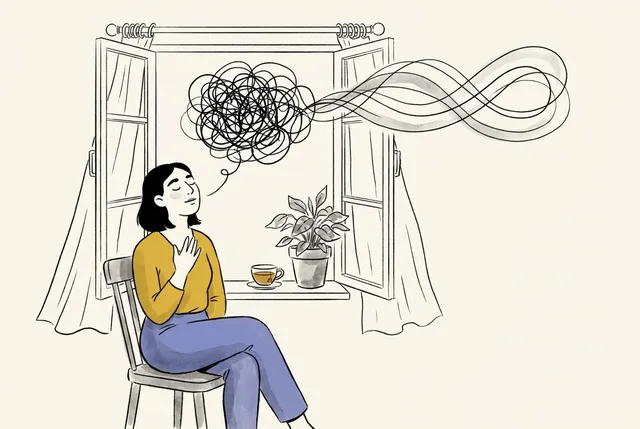
What is rumination, and how do you stop replaying your thoughts?
Replaying an argument for hours, asking “why me?” over and over. Rumination keeps you stuck and fuels depression. Here’s what research says and techniques that help.
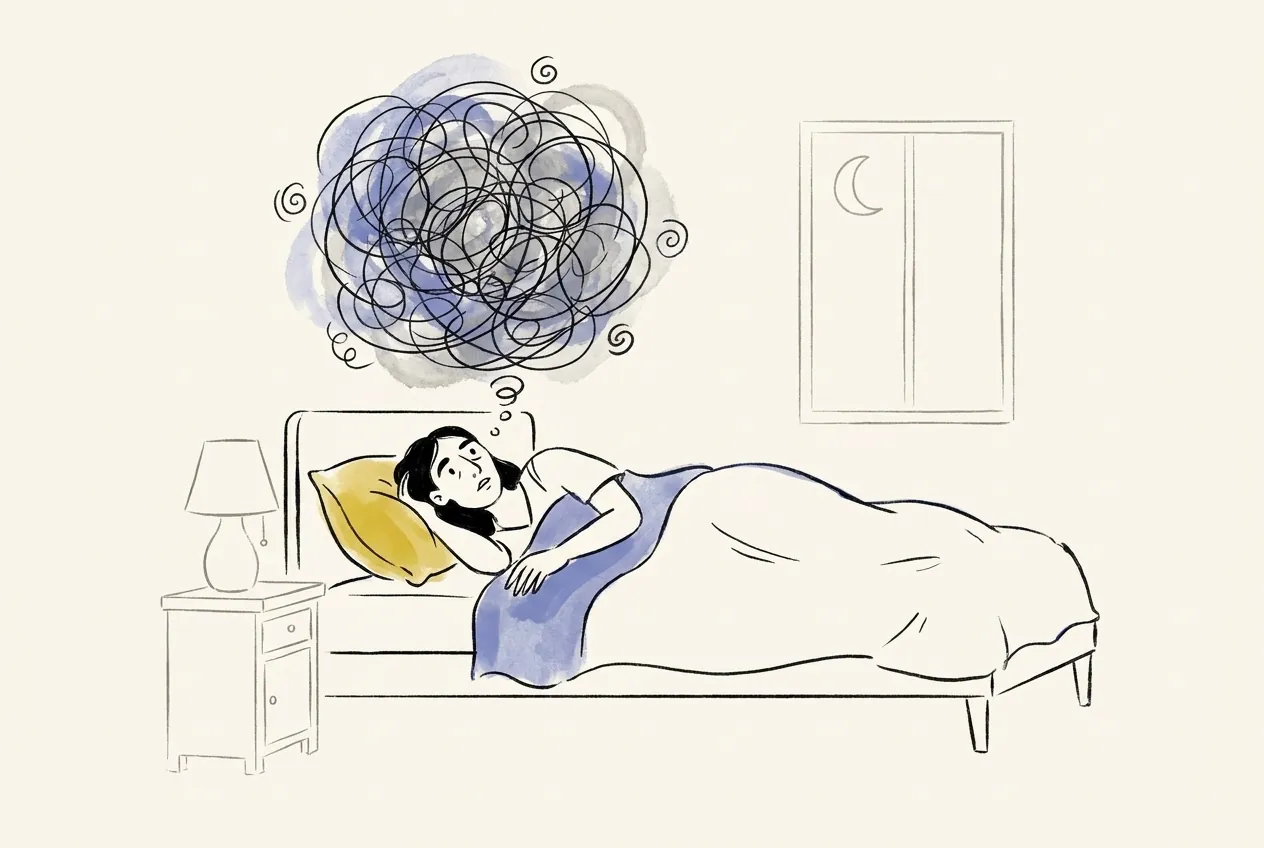
Rumination (overthinking, repetitive negative thinking) — a pattern of repetitively and passively focusing on one’s distress and its causes and consequences, without moving toward solutions.
Rumination is repetitive, passive thinking about your distress — why it happened, what it means, what’s wrong with you — without moving toward a solution. Research shows rumination predicts the onset and duration of depression and makes problem-solving harder. Techniques like self-distancing, scheduled worry time, shifting attention and switching to concrete action can break the cycle.
- Rumination feels like problem-solving but usually isn’t.
- It predicts depression and makes low moods last longer.
- Looking at your situation from a distance reduces emotional reactivity.
You replay the argument with your partner for the hundredth time. You lie awake asking, “Why did I say that? What’s wrong with me?” You feel like you’re thinking it through, but you never get anywhere. That’s rumination.
What research shows
Susan Nolen-Hoeksema, Blair Wisco and Sonja Lyubomirsky reviewed decades of research on rumination 1. They found that rumination:
- predicts the onset of depression and makes depressive episodes last longer;
- worsens anxiety and is linked to binge eating and drinking;
- impairs problem-solving — people who ruminate come up with worse solutions and are less likely to act on them;
- pushes away support, as friends grow tired of hearing the same worries.
Rumination is more common among women, which may partly explain why depression is more common in women too.
Why distance helps
Özlem Ayduk and Ethan Kross studied self-distancing — looking at a painful experience as if you were an observer, a “fly on the wall,” rather than reliving it 2. People who naturally took a distanced perspective reacted less intensely, ruminated less and were better able to make sense of what happened.
Techniques that help
- Use your name or “you.” Ask: “Why is Sarah so upset about this?” instead of “Why am I so upset?” It creates distance.
- Zoom out in time: “How will I feel about this in a year?”
- Switch from why to how: “Why does this always happen to me?” → “What’s one step I can take?”
- Scheduled worry time: give rumination a 15-minute appointment, then postpone it.
- Shift attention: a walk, a phone call, a task that absorbs you. Distraction isn’t avoidance when it breaks a loop.
- Notice, don’t fight: “I’m ruminating again.” Labeling the process loosens its grip.
When to get help
If rumination keeps you awake, affects your mood for weeks or comes with thoughts of hopelessness, talk to a therapist. CBT and mindfulness-based cognitive therapy specifically target rumination. If you have thoughts of suicide, call or text 988.
Frequently asked questions
What’s the difference between rumination and reflection?
Reflection moves toward understanding or action and usually brings some relief. Rumination circles the same questions and leaves you feeling worse.
Does writing about my feelings help or make rumination worse?
Structured writing that makes sense of an experience can help. If writing just replays the same hurt, switch to writing about what you can do next.
Sources
- Nolen-Hoeksema, S., Wisco, B. E., & Lyubomirsky, S. (2008). Rethinking Rumination. Perspectives on Psychological Science, 3(5), 400–424. doi:10.1111/j.1745-6924.2008.00088.x
- Ayduk, Ö., & Kross, E. (2010). From a distance: Implications of spontaneous self-distancing for adaptive self-reflection. Journal of Personality and Social Psychology, 98(5), 809–829. doi:10.1037/a0019205
Evidence-based · Human-centered · Practical — how we write and fact-check our articles.
This article is for educational purposes and does not replace advice from a licensed professional. We cite original research and update articles when new evidence appears. Spotted an error? Let us know — see our editorial policy.
If you or someone you love is in crisis, call or text 988 (Suicide & Crisis Lifeline). Veterans: dial 988, then press 1.