How to help someone who is thinking about suicide
Asking directly about suicide doesn’t plant the idea — it can save a life. Here’s what to say, what to do, and how a safety plan and 988 can help.
If you’re worried someone is thinking about suicide, ask them directly. Research shows asking doesn’t increase suicidal thoughts — and may reduce them. Listen without judgment, help them stay safe (especially by separating them from firearms and other lethal means), and connect them to help like the 988 Suicide & Crisis Lifeline. A written safety plan is a proven, practical tool.
- Asking “Are you thinking about suicide?” doesn’t put the idea in someone’s head.
- Reducing access to firearms and medications saves lives.
- A safety plan helps a person get through a crisis step by step.
If you or someone you know is in crisis right now, call or text 988. Veterans and service members: dial 988, then press 1. If someone is in immediate danger, call 911.
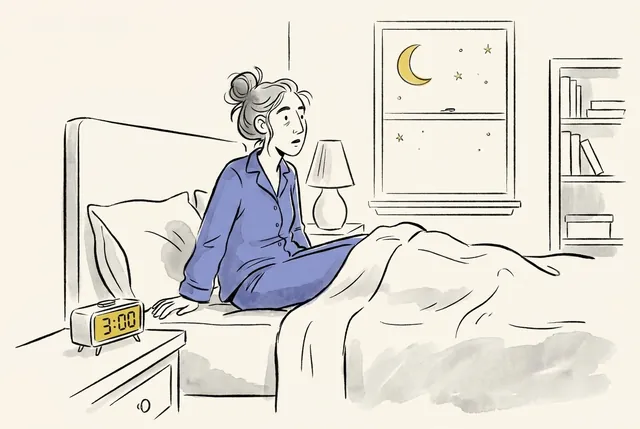
You notice that your friend, partner or teenager seems hopeless. They’ve said things like “Everyone would be better off without me.” You’re scared to say the wrong thing. Here’s what research says helps.
Ask directly
Many people fear that mentioning suicide will plant the idea. Tiffany Dazzi and colleagues reviewed the research 1. Asking about suicide did not increase suicidal thoughts — and in some studies it reduced distress. Asking shows you care and that it’s okay to talk.
Ask plainly: “Are you thinking about killing yourself?” or “Are you thinking about suicide?”
Warning signs
- Talking about wanting to die, being a burden or having no reason to live.
- Looking for ways to end their life, such as searching online or getting a gun.
- Withdrawing from people, giving away possessions, saying goodbye.
- Increased drinking or drug use, reckless behavior.
- Extreme mood swings, or sudden calm after a period of deep depression.
How to help
- Listen without judgment. Don’t argue, lecture or minimize (“You have so much to live for”).
- Take it seriously. Don’t leave them alone if you think they’re in immediate danger.
- Reduce access to lethal means. More than half of suicide deaths in the US involve a firearm. Ask about guns in the home and help store them away from the person — with a friend, a gun shop or law enforcement — or locked with the key held by someone else. Lock up medications too.
- Connect them to help. Call or text 988 together. Offer to go with them to a doctor or therapist.
- Follow up. A text or call in the days after can make a real difference.
Make a safety plan
Barbara Stanley and Gregory Brown developed the Safety Planning Intervention, now widely used in US emergency rooms and the VA 2. It’s a short, written plan the person keeps on hand:
- My warning signs — thoughts, moods, situations that signal a crisis.
- Things I can do on my own to cope — a walk, music, a shower.
- People and places that help me get my mind off things.
- People I can ask for help.
- Professionals and crisis lines — including 988.
- Making my environment safer — especially firearms and medications.
Take care of yourself too
Supporting someone through a crisis is hard. You can call 988 for guidance yourself, even if you’re not the one in crisis.
This is a sensitive topic. If you’re having thoughts of suicide yourself, please reach out — you deserve support. Call or text 988, any time.
Frequently asked questions
What if they ask me to keep it a secret?
Don’t promise secrecy when a life is at risk. You can say: “I care about you too much to keep this to myself. Let’s get help together.”
What happens when you call 988?
A trained crisis counselor answers, listens and helps you work through the moment. Most calls are resolved on the phone; emergency services are involved only when someone is in immediate danger.
Sources
- Dazzi, T., Gribble, R., Wessely, S., & Fear, N. T. (2014). Does asking about suicide and related behaviours induce suicidal ideation? What is the evidence?. Psychological Medicine, 44(16), 3361–3363. doi:10.1017/S0033291714001299
- Stanley, B., & Brown, G. K. (2012). Safety Planning Intervention: A Brief Intervention to Mitigate Suicide Risk. Cognitive and Behavioral Practice, 19(2), 256–264. doi:10.1016/j.cbpra.2011.01.001
Evidence-based · Human-centered · Practical — how we write and fact-check our articles.
This article is for educational purposes and does not replace advice from a licensed professional. We cite original research and update articles when new evidence appears. Spotted an error? Let us know — see our editorial policy.
If you or someone you love is in crisis, call or text 988 (Suicide & Crisis Lifeline). Veterans: dial 988, then press 1.