How to help a veteran who started drinking too much
Combat deployment is linked to new heavy drinking, especially among younger service members and the Guard and Reserve. Here’s how families can help — without nagging.
Research on tens of thousands of US service members found that combat deployment was linked to new-onset heavy drinking, binge drinking and alcohol-related problems, especially among younger troops and Reserve and National Guard members. Families can’t force change, but approaches like CRAFT help many reluctant loved ones enter treatment. The VA and military health system offer confidential alcohol treatment.
- Combat deployment raises the risk of new heavy and binge drinking.
- Reserve and National Guard members and younger troops are especially at risk.
- Family members who use CRAFT get more loved ones into treatment.
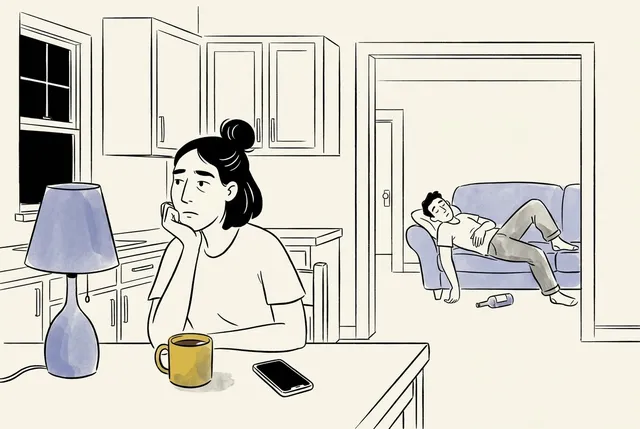
He used to have a beer or two on weekends. Since he came home, it’s most nights, and more than a few. He says it helps him sleep and “take the edge off.” Many military families recognize this picture.
What research shows
Isabel Jacobson and colleagues followed more than 48,000 US service members in the Millennium Cohort Study before and after deployment 1. Those who deployed and reported combat exposure were more likely to develop new-onset heavy weekly drinking, binge drinking and alcohol-related problems. The risk was highest among Reserve and National Guard members and younger service members.
Alcohol is often used to cope with PTSD symptoms, sleep problems and the transition home — but it makes all of them worse in the long run.
Warning signs
- Drinking more often or more at a time.
- Drinking to sleep, calm down or forget.
- Hiding drinking or lying about it.
- Driving after drinking, getting into fights.
- Problems at work or with the family because of drinking.
- Feeling irritable or anxious when not drinking.
How families can help
Hendrik Roozen and colleagues reviewed studies of CRAFT (Community Reinforcement and Family Training) 2. Family members trained in CRAFT helped about two-thirds of reluctant loved ones enter treatment — more than with confrontational interventions or traditional support groups alone. CRAFT teaches you to:
- Reward sober time: plan enjoyable things together when he isn’t drinking.
- Stop protecting from consequences: don’t call in sick for him or clean up after him.
- Communicate positively: “I miss you when you’ve been drinking” instead of “You’re a drunk.”
- Choose the moment: suggest help when he’s sober and things are calm.
- Take care of your own safety and well-being.
Where to get help
- VA substance use treatment for enrolled veterans; ask about programs that treat PTSD and alcohol together.
- Military OneSource (800-342-9647) and installation substance abuse programs for active-duty members.
- SAMHSA National Helpline: 1-800-662-4357 — free, confidential, 24/7.
- For you: Al-Anon, SMART Recovery Family & Friends, or a CRAFT-trained therapist.
If drinking comes with thoughts of suicide, dial 988 and press 1, or text 838255. If you feel unsafe at home, call 911 or the National Domestic Violence Hotline (1-800-799-7233).
Frequently asked questions
Is drinking to sleep a problem?
Alcohol may help you fall asleep, but it worsens sleep quality and nightmares over time. If you or your loved one drinks to sleep, it’s a sign to talk to a doctor.
Will seeking help for alcohol hurt a military career?
Self-referral for alcohol problems is generally treated differently from alcohol-related incidents. Ask about confidential options through Military OneSource or a chaplain.
Sources
- Jacobson, I. G. (2008). Alcohol Use and Alcohol-Related Problems Before and After Military Combat Deployment. JAMA, 300(6), 663. doi:10.1001/jama.300.6.663
- Roozen, H. G., De Waart, R., & Van Der Kroft, P. (2010). Community reinforcement and family training: an effective option to engage treatment‐resistant substance‐abusing individuals in treatment. Addiction, 105(10), 1729–1738. doi:10.1111/j.1360-0443.2010.03016.x
Evidence-based · Human-centered · Practical — how we write and fact-check our articles.
This article is for educational purposes and does not replace advice from a licensed professional. We cite original research and update articles when new evidence appears. Spotted an error? Let us know — see our editorial policy.
If you or someone you love is in crisis, call or text 988 (Suicide & Crisis Lifeline). Veterans: dial 988, then press 1.